Hot Tenting in a Bell Tent: The Warmth, Comfort and Essential Safety Equipment You Need
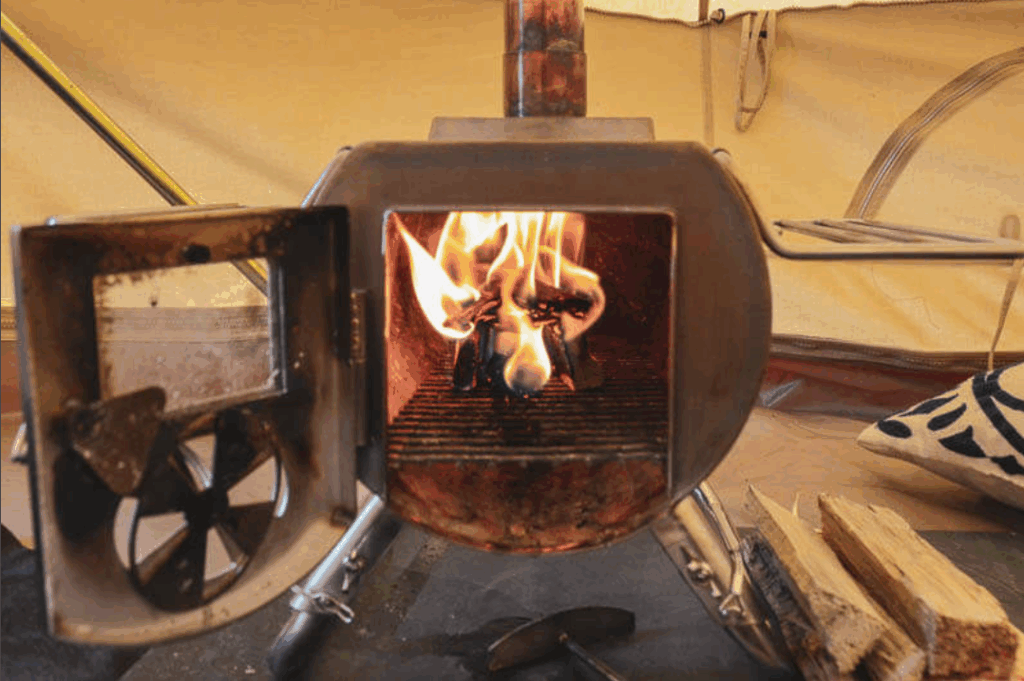
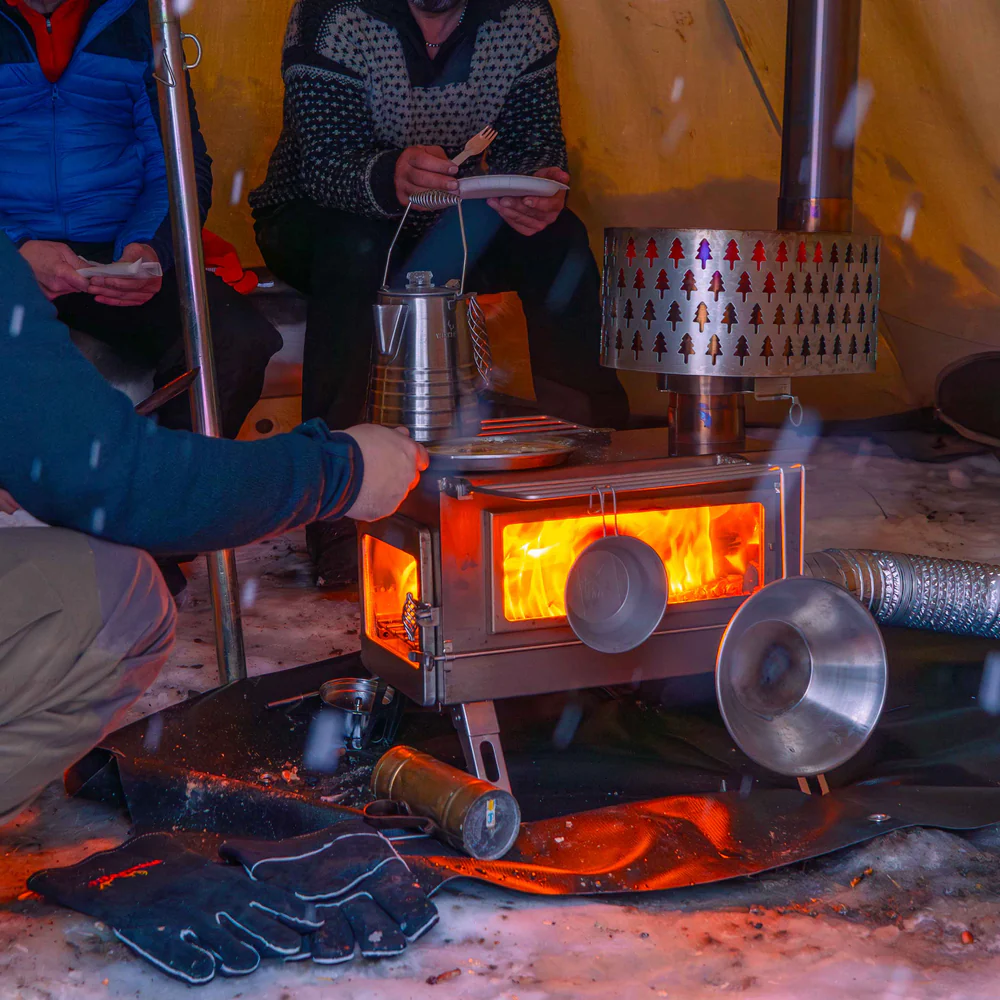
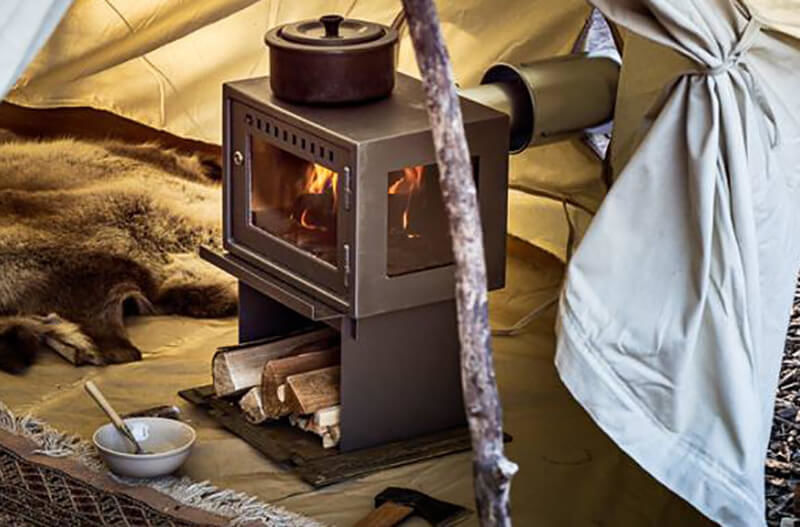
There’s something timeless about sitting beside a crackling stove inside a canvas bell tent. As the temperature drops outside, the tent fills with warmth, the soft glow of the fire dances across the canvas walls, and the simple act of camping becomes something far more memorable.
Known as hot tenting, using a wood-burning stove inside a bell tent transforms cold-weather camping into a cosy, comfortable experience. Whether you’re camping through winter, extending your season into the cooler months, or simply enjoying a weekend escape, a properly installed stove can make your bell tent feel like a true home away from home.
However, enjoying the benefits of hot tenting requires the correct equipment and careful attention to safety. Here’s everything you need to know.
Why Campers Love Hot Tenting
For many campers, winter is the best time to be outdoors. The crowds disappear, the air is crisp, and campfires feel more rewarding than ever.
A stove inside a bell tent offers several advantages:
Comfortable Warmth
Unlike sleeping bags and blankets that only keep you warm while you’re inside them, a stove heats the entire tent. You can comfortably read, cook, relax and socialise even on cold evenings.
Reduced Condensation
The dry heat generated by a wood-burning stove helps reduce condensation inside the tent, keeping bedding, clothing and gear drier and more comfortable.
Extended Camping Seasons
Many campers pack away their tents once temperatures start to fall. With a stove, your bell tent becomes a true four-season shelter, allowing you to enjoy camping throughout autumn and winter.
Atmosphere and Ambience
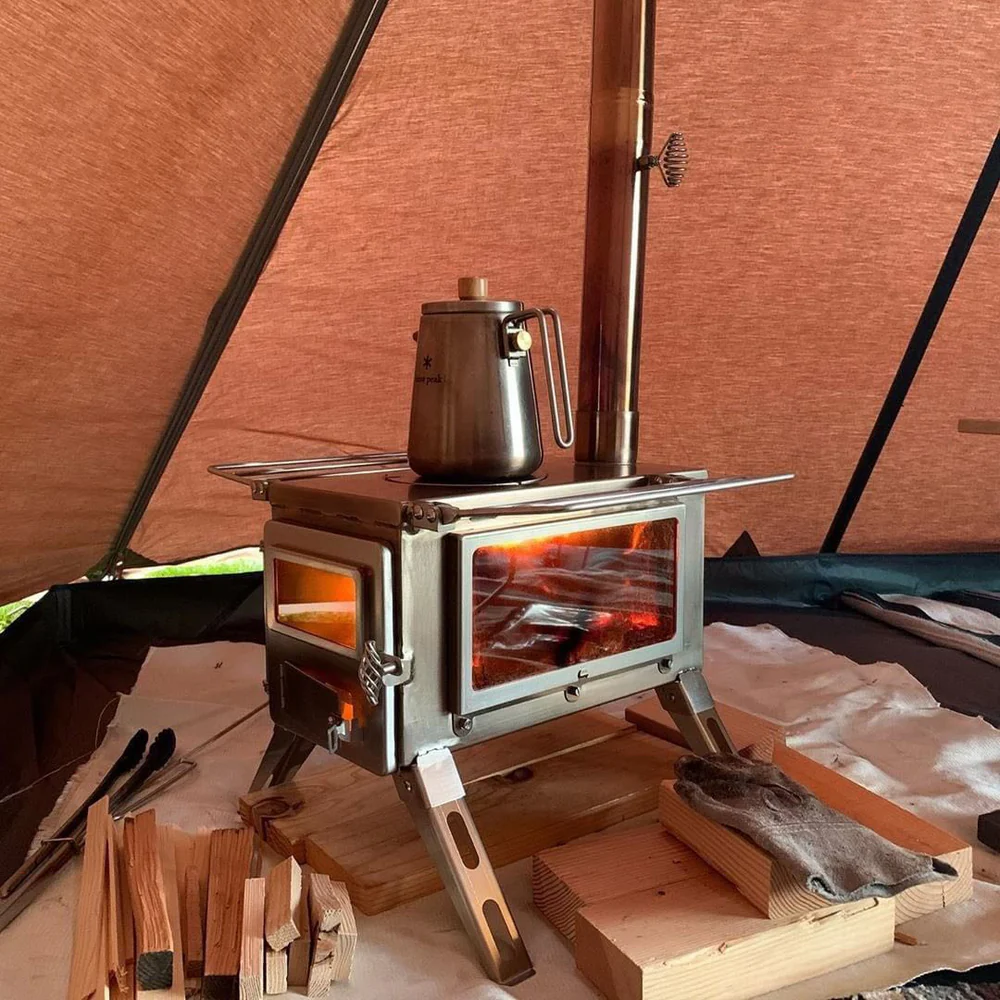
Perhaps the greatest appeal is the experience itself. Few things compare to watching flames flicker through a stove window while rain falls outside or while you’re surrounded by a frosty winter landscape.
The Essential Components for Safe Hot Tenting
Installing a stove inside a canvas tent isn’t as simple as placing it on the ground and lighting a fire. Every component plays an important role in protecting your tent and ensuring safe operation.
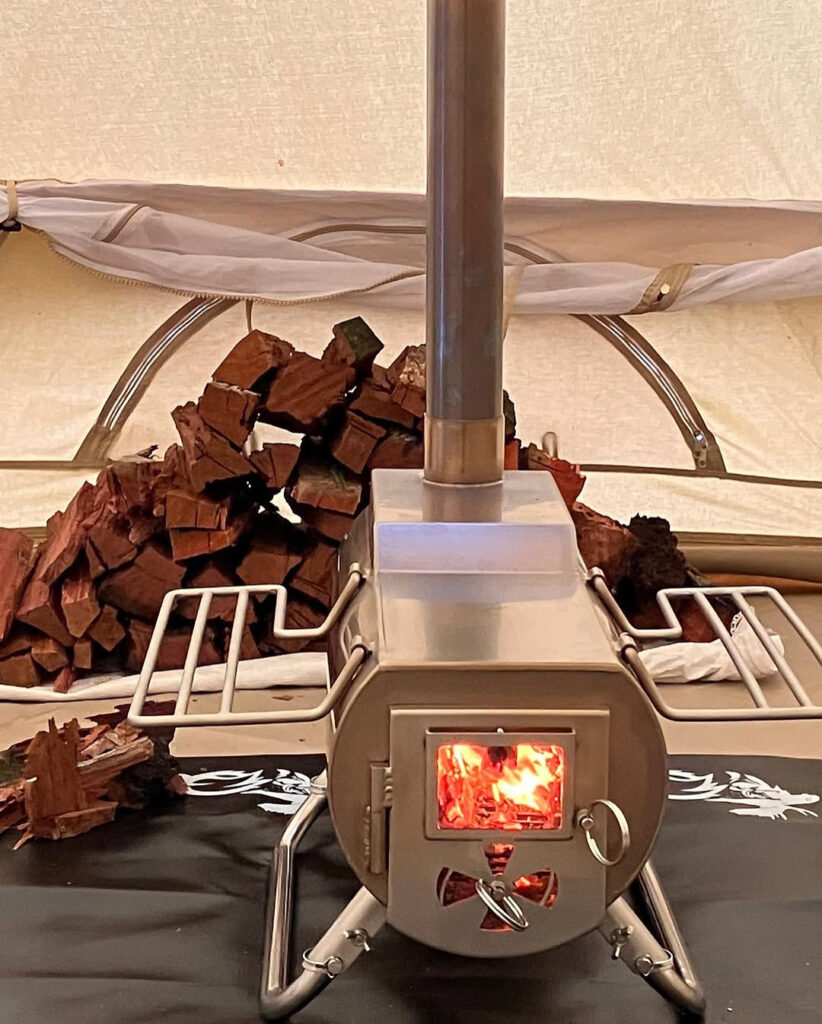
1. A Suitable Tent Stove
Not all stoves are suitable for use inside tents.
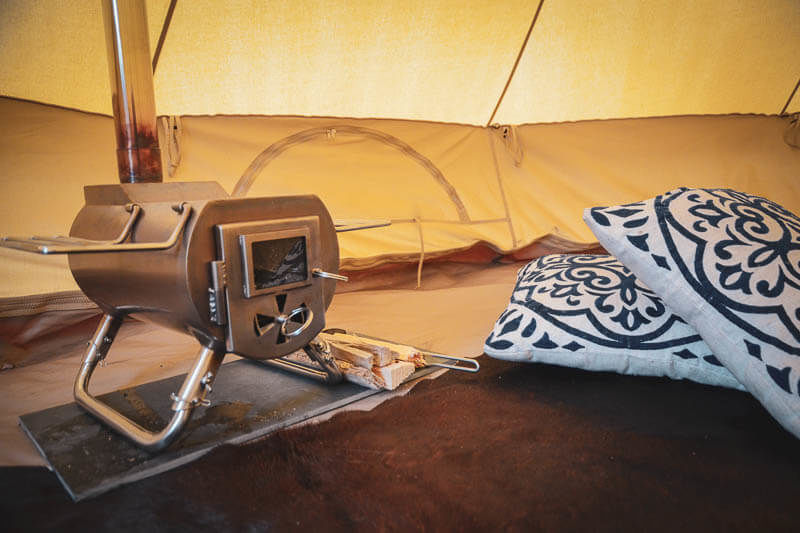
A dedicated tent stove is designed to be portable, efficient and compatible with flue systems that safely direct smoke and heat outside the tent. The stove should be appropriately sized for your tent to avoid overheating the space.
When selecting a stove, consider:
- Heating capacity
- Weight and portability
- Firebox size
- Cooking functionality
- Compatibility with tent flue systems
A quality stove will provide years of reliable service and make winter camping significantly more enjoyable.
2. A Heat-Proof Stove Mat
A heat-proof stove mat is essential beneath any tent stove.
The mat protects the groundsheet from radiant heat, falling embers and accidental ash spills. Even the most careful stove user can occasionally drop a hot coal while loading firewood.
A properly sized stove mat provides an important layer of protection and helps preserve the life of your tent floor.
3. A Flue Exit
The stove flue must pass safely through the tent wall or roof via a purpose-designed flue exit.
A flue exit creates a protected opening that allows the chimney pipe to exit the tent without exposing the canvas directly to high temperatures.
Attempting to improvise a flue opening is never recommended. Purpose-built exits are designed specifically for hot tenting applications and provide the necessary heat resistance and durability.
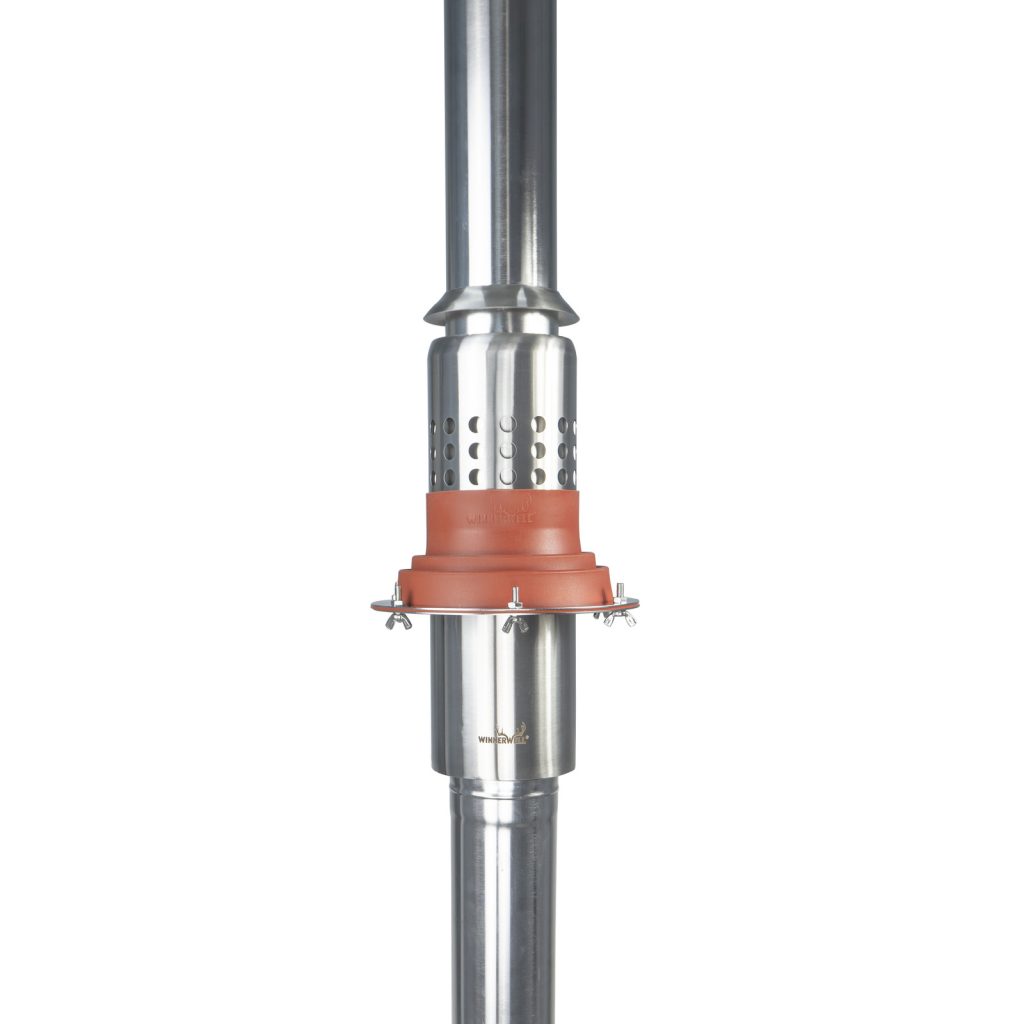
4. A Triple-Wall Flue Protector
As the flue exits the tent, temperatures can become extremely high.
A triple-wall flue protector creates an insulated barrier between the hot chimney pipe and the surrounding canvas. This dramatically reduces surface temperatures and helps prevent heat damage to the tent.
The protector is one of the most important safety components in any hot tenting setup and should always be used where the flue passes close to tent fabric.
Safe Stove Placement
Correct positioning is just as important as using the right equipment.
Your stove should:
- Sit on a stable, level surface
- Be positioned away from tent walls
- Have adequate clearance from bedding and gear
- Allow the flue to run as vertically as possible
- Be located where people can move safely around it
Always follow the manufacturer’s recommendations regarding clearances and installation requirements.
Ventilation Matters
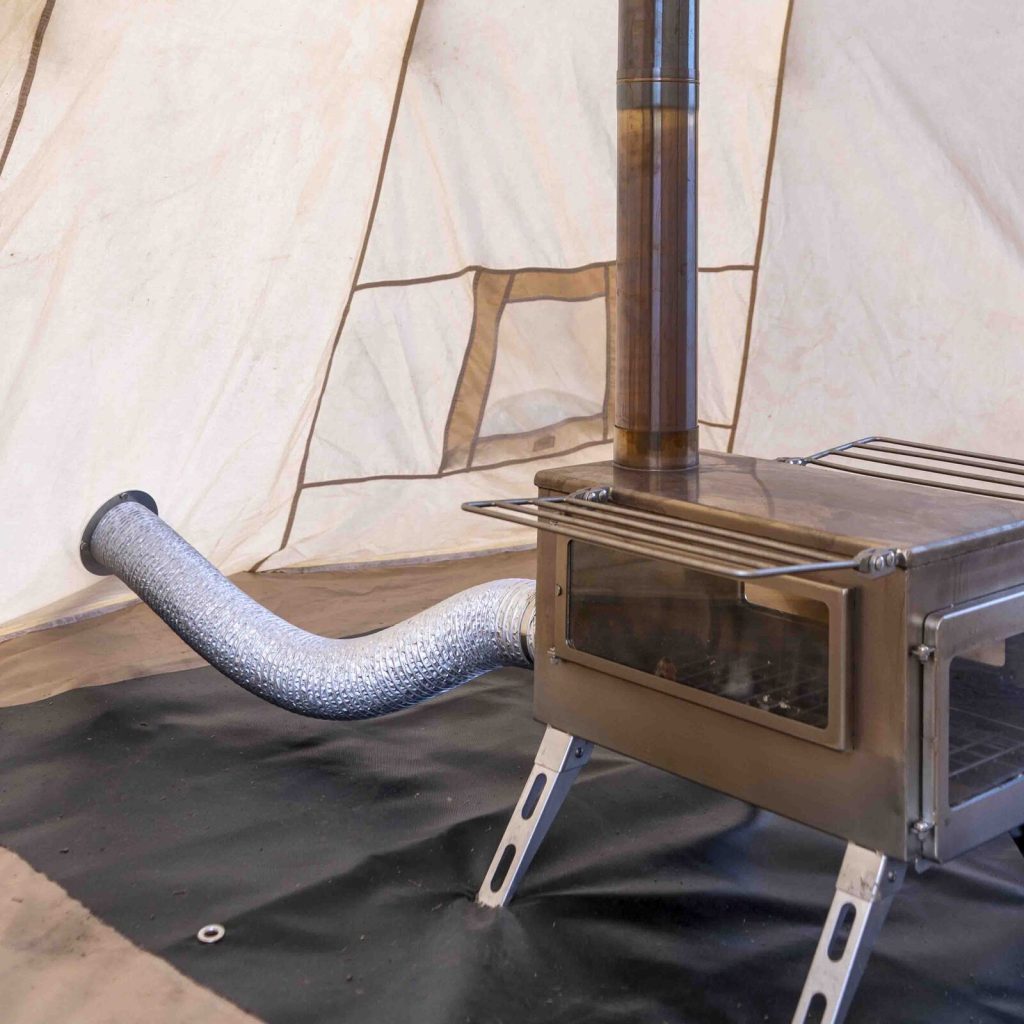
While the stove generates warmth, your tent still requires adequate airflow.
Good ventilation helps:
- Maintain air quality
- Reduce condensation
- Ensure efficient stove operation
- Improve overall comfort
Never completely seal your tent while operating a stove. Bell tents naturally provide excellent airflow through vents, doors and adjustable openings.
Fire Safety Essentials
Every hot tenter should carry basic fire safety equipment.
Recommended items include:
- Heat-resistant gloves
- Fire extinguisher
- Fire blanket
- Carbon monoxide alarm
- Stove tools for safely handling hot components
A carbon monoxide alarm is particularly important whenever combustion occurs inside an enclosed shelter.
Why Canvas Bell Tents Are Ideal for Hot Tenting
Canvas bell tents have become the preferred choice for hot tenting enthusiasts around the world.
The breathable nature of canvas helps regulate moisture and temperature more effectively than many synthetic materials. Combined with generous interior space and excellent ventilation, canvas bell tents create an ideal environment for stove camping.
When paired with the correct accessories—including a stove mat, flue exit and triple-wall flue protector—a quality canvas bell tent becomes a remarkably comfortable shelter for cold-weather adventures.
Enjoy Winter Camping in Comfort
Hot tenting combines the beauty of the outdoors with a level of comfort that surprises many first-time users. A warm tent, a glowing stove and a peaceful winter campsite create an experience that keeps campers returning year after year.
The key is preparation. By investing in a suitable stove and using the correct safety equipment—including a heat-proof mat, flue exit and triple-wall flue protector—you can enjoy all the benefits of hot tenting while protecting both your tent and your camping companions.
Winter camping doesn’t have to mean enduring the cold. With the right setup, it may become your favourite season to camp.