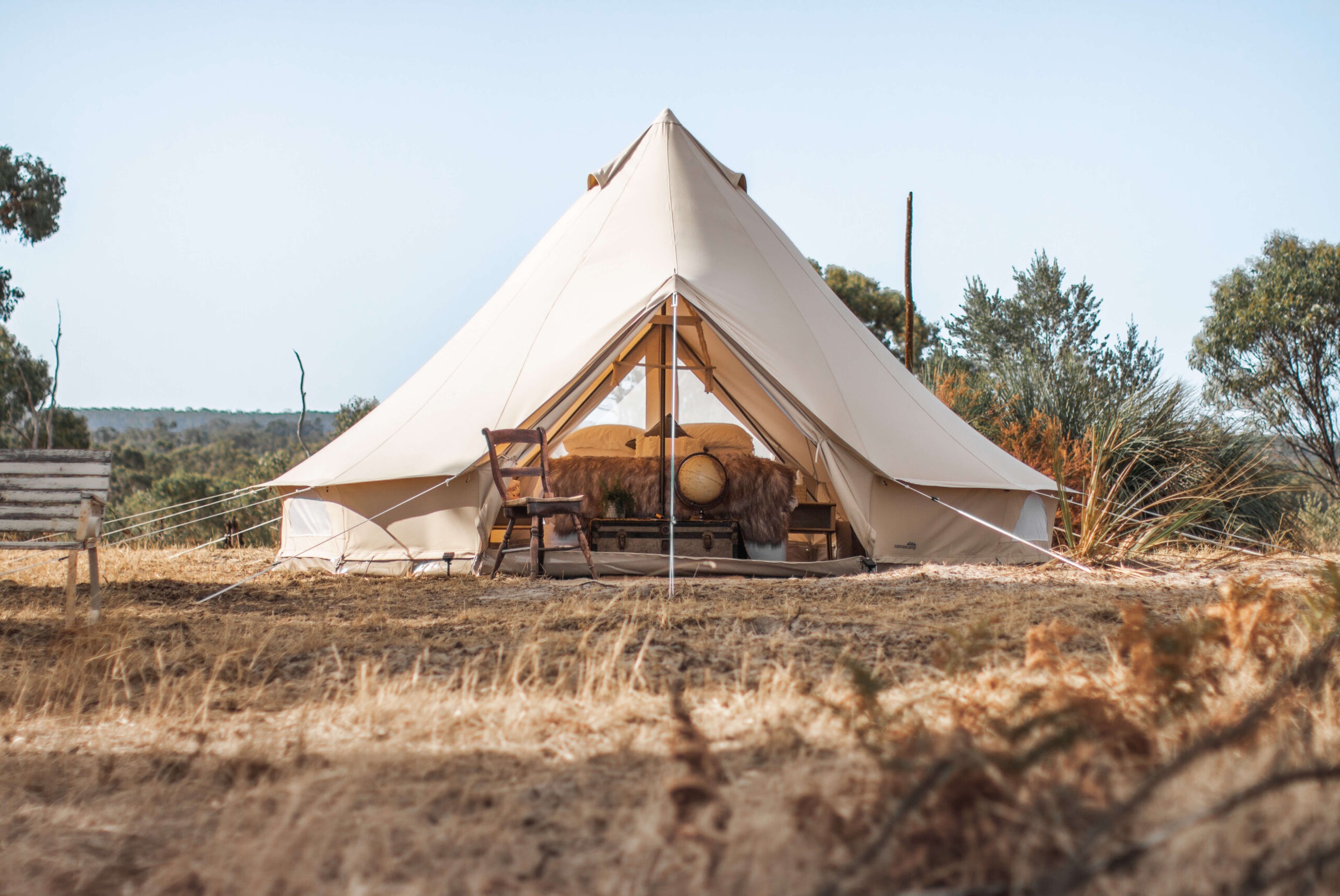
How to Re-Waterproof a Canvas Tent: A Complete Guide for Bell Tent Owners

Has Your Canvas Tent Lost Its Waterproofing?
One of the biggest advantages of owning a quality canvas bell tent is its longevity. Unlike synthetic tents that often need replacing after a few seasons, a well-maintained canvas tent can provide decades of camping adventures.
However, even the highest-quality canvas tents will eventually require re-waterproofing.
Sunlight, heavy rain, coastal conditions, dirt, mould, and general wear gradually break down the waterproof coating applied during manufacturing. Fortunately, restoring your tent’s water resistance is a straightforward process that can dramatically extend its lifespan.
If you’ve noticed water no longer beading on the canvas surface, dark damp patches forming after rain, or your tent has simply seen years of use, it may be time to reproof your tent.

Why Canvas Tents Need Re-Waterproofing
Canvas is naturally water-resistant, but modern bell tents also receive specialised waterproof and anti-mould treatments during production. Over time these treatments gradually wear away through exposure to:
- UV radiation
- Rain and moisture
- Salt air in coastal environments
- Dust and dirt buildup
- Cleaning and scrubbing
- Long-term outdoor storage
UV exposure is particularly harsh on canvas tents in Australia, where strong sunlight can significantly reduce the effectiveness of waterproof treatments over time.

How Often Should You Re-Waterproof a Bell Tent?
There is no fixed schedule.
A bell tent used occasionally for weekend camping may go several years before needing reproofing, while tents used for glamping businesses, long-term camping, festivals, or seasonal accommodation may require treatment much more regularly.
Signs your tent may need re-waterproofing include:
- Water soaking into the canvas rather than beading on the surface
- Damp patches appearing during rain
- Increased mould or mildew staining
- Fading or weathered canvas
- Areas that have been heavily cleaned after mould removal
As a general rule, tents exposed to frequent sun and weather should be inspected annually.

Screenshot
Before You Waterproof: Clean the Tent Properly
Waterproofing should never be applied to a dirty tent.
Before reproofing:
- Pitch the tent fully.
- Allow it to dry completely.
- Brush away loose dirt, dust and debris.
- Clean any mould or mildew using products designed specifically for canvas tents.
- Allow the tent to dry thoroughly.
Avoid household detergents, dishwashing liquids, bleach, pressure washers, or harsh chemical cleaners, as these can damage the canvas fibres and strip away existing treatments.
For more information, read our guide:
Related reading: How to Clean Your Bell Tent

Screenshot
Choosing an External Waterproofing Agent
Once the tent is clean and dry, it’s time to apply a waterproofing treatment.
The most effective products are external canvas reproofing agents specifically formulated for cotton canvas tents. These treatments restore:
- Water repellency
- UV resistance
- Mould resistance
- Overall canvas longevity
At Breathe Bell Tents, we’ve long recommended canvas-specific treatments such as Bradproof for restoring waterproof performance. When applying any waterproofing product, always follow the manufacturer’s instructions carefully.

How to Re-Waterproof Your Canvas Tent
Step 1: Pitch the Tent
Set up the tent fully so every section of canvas is accessible.
Step 2: Ensure the Canvas is Completely Dry
The waterproofing agent must penetrate the fibres effectively. Applying it to damp canvas can reduce performance.
Step 3: Apply the Waterproofing Treatment
Depending on the product, application can be done using:
- A low-pressure sprayer
- Paint roller
- Sponge
- Soft brush
Work methodically from top to bottom, ensuring even coverage.
Pay particular attention to:
- Roof panels
- High-wear areas
- Seams and stitching
- Doorways
- Areas exposed to prolonged sunlight

Step 4: Allow to Dry Thoroughly
Leave the tent pitched until completely dry.
Avoid packing away the tent until curing is complete.
Step 5: Water Test
Once dry, lightly hose down the tent and observe whether water beads and runs off the canvas surface.
If necessary, apply a second coat to heavily weathered areas.
What About New Bell Tents?
A new canvas tent usually does not require immediate waterproofing.
Instead, it should be properly seasoned.
Seasoning involves pitching the tent and thoroughly soaking it with water before allowing it to dry. This causes the natural cotton fibres to swell and tighten around the stitching holes, improving waterproof performance.
If you’re new to canvas camping, we recommend reading:
Related reading: How to Season a Bell Tent or Sibley Tent Properly
Re-Waterproofing After Mould Removal
If mould or mildew has been cleaned from the canvas, reproofing becomes especially important.
Many cleaning processes remove part of the tent’s protective coating, leaving the canvas vulnerable to moisture penetration.
Once the affected area is fully cleaned and dry, applying a fresh waterproof treatment helps restore protection and reduce the likelihood of future mould growth.
Extend the Life of Your Bell Tent
The best waterproofing treatment is preventative maintenance.
To maximise the lifespan of your tent:
- Never store the tent wet.
- Dry it completely before packing away.
- Brush off dirt before storage.
- Ensure good ventilation during use.
- Reproof weathered areas before leaks develop.
- Inspect the tent annually for signs of UV damage.
With proper care, a quality canvas bell tent can provide decades of comfortable camping, glamping and outdoor adventures.

Keep Your Bell Tent Adventure-Ready
Canvas tents are built to last, but like any premium outdoor equipment, they benefit from occasional maintenance.
A simple re-waterproofing treatment every few years can dramatically improve weather protection, prevent mould issues, and extend the life of your investment.
Whether you’re preparing for winter camping, setting up a glamping retreat, or simply getting ready for your next family adventure, keeping your canvas properly waterproofed ensures your bell tent performs exactly as it should when the weather turns.

Further Reading: