Choosing Tents for a Council-Funded Glamping or Nature-Tourism Project
Across Australia, councils and tourism bodies are investing in nature-based accommodation, regional tourism and low-impact visitor experiences. For caravan parks, farm stays, eco-retreats and adventure-tourism operators, this creates an exciting opportunity to establish or expand a glamping offering.
Receiving funding or gaining approval, however, is only the beginning. The accommodation must still be safe, practical, visually appealing and suited to commercial use. Choosing the right tents is one of the most important decisions in the project.
A tent that photographs beautifully but cannot withstand frequent use, extended pitching or Australia’s demanding climate can quickly become an expensive mistake. Here are the key considerations when selecting tents for a council-funded glamping or nature-tourism development.
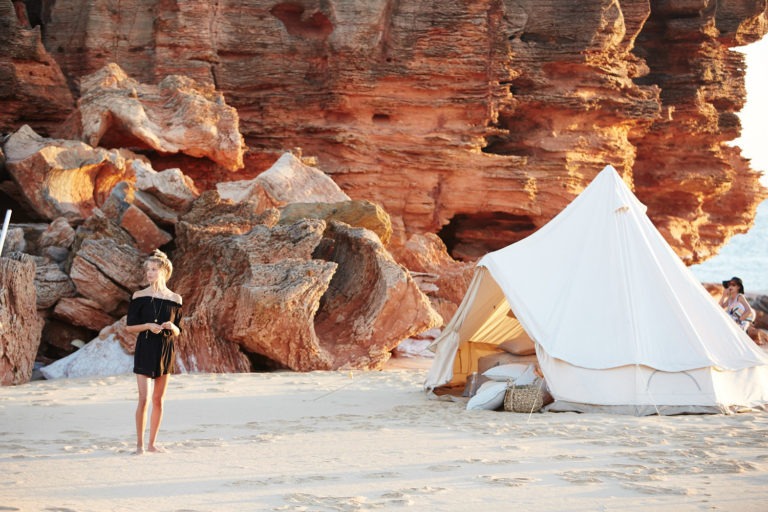
Begin with the intended use
Before comparing tent models, define exactly how the accommodation will operate.
Will the tents remain pitched for an entire season or throughout the year? Will they be installed only for special events? Are they intended for couples, families or groups? Will guests have private bathrooms, or will they use shared facilities? Will each tent be placed on a timber platform or pitched directly onto the ground?
These details influence the most suitable tent size, canvas specification, door configuration, ventilation, protective accessories and installation method.
A lightweight recreational tent may be ideal for occasional camping but is rarely the right choice for accommodation that will be occupied by paying guests week after week. Commercial projects should begin with a tent designed for professional or extended use.

Choose a tent made for commercial conditions
For a glamping business, the initial purchase price is only one part of the equation. The more useful question is: how well will the tent perform over its working life?
Commercial tents need to cope with repeated guest use, regular cleaning, prolonged exposure and the operational demands of an accommodation business. Look for:
- High-quality, breathable technical cotton canvas.
- Strong seams, attachment points and hardware.
- A heavy-duty, waterproof groundsheet.
- Good ventilation and practical door access.
- Components that can be maintained, repaired or replaced.
- Reliable spare-part availability.
- Clear support from an established supplier.
The ability to replace a pole, peg, guy line or other component is particularly important. A repairable and maintainable tent can remain in service far longer than a product that must be discarded when one part fails.
At Breathe Bell Tents, we generally recommend the Apex Professional Series for commercial glamping, caravan parks and longer-term installations. It is our most durable Sibley bell tent range and has been developed for professional operators who need more than an occasional-use camping tent.
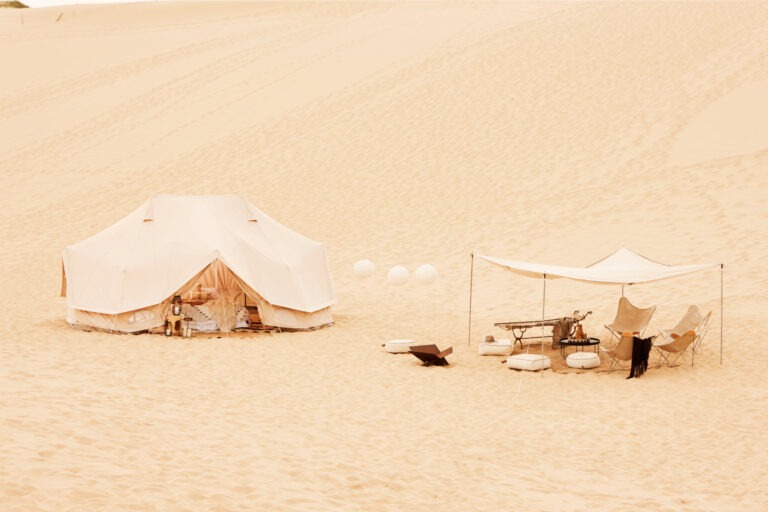
Select the right size and configuration
The right tent size depends on both guest capacity and the experience you want to create.
A smaller tent may work well as an intimate couples’ retreat, while a larger tent allows space for a proper bed, bedside tables, seating, storage and other furnishings. Families need sufficient room for additional beds without making the interior feel crowded.
It is important to assess usable internal space rather than relying only on the stated diameter. Bell tents have sloping walls, so furniture layout should be considered before the final size is selected.
Door configuration also matters. Double-door models can improve access, airflow and furniture placement, and may be especially useful when the tent connects to an outdoor bathroom, private deck or landscaped guest area.
Our Complete Bell Tent Buying Guide provides further guidance on choosing between different diameters and layouts.
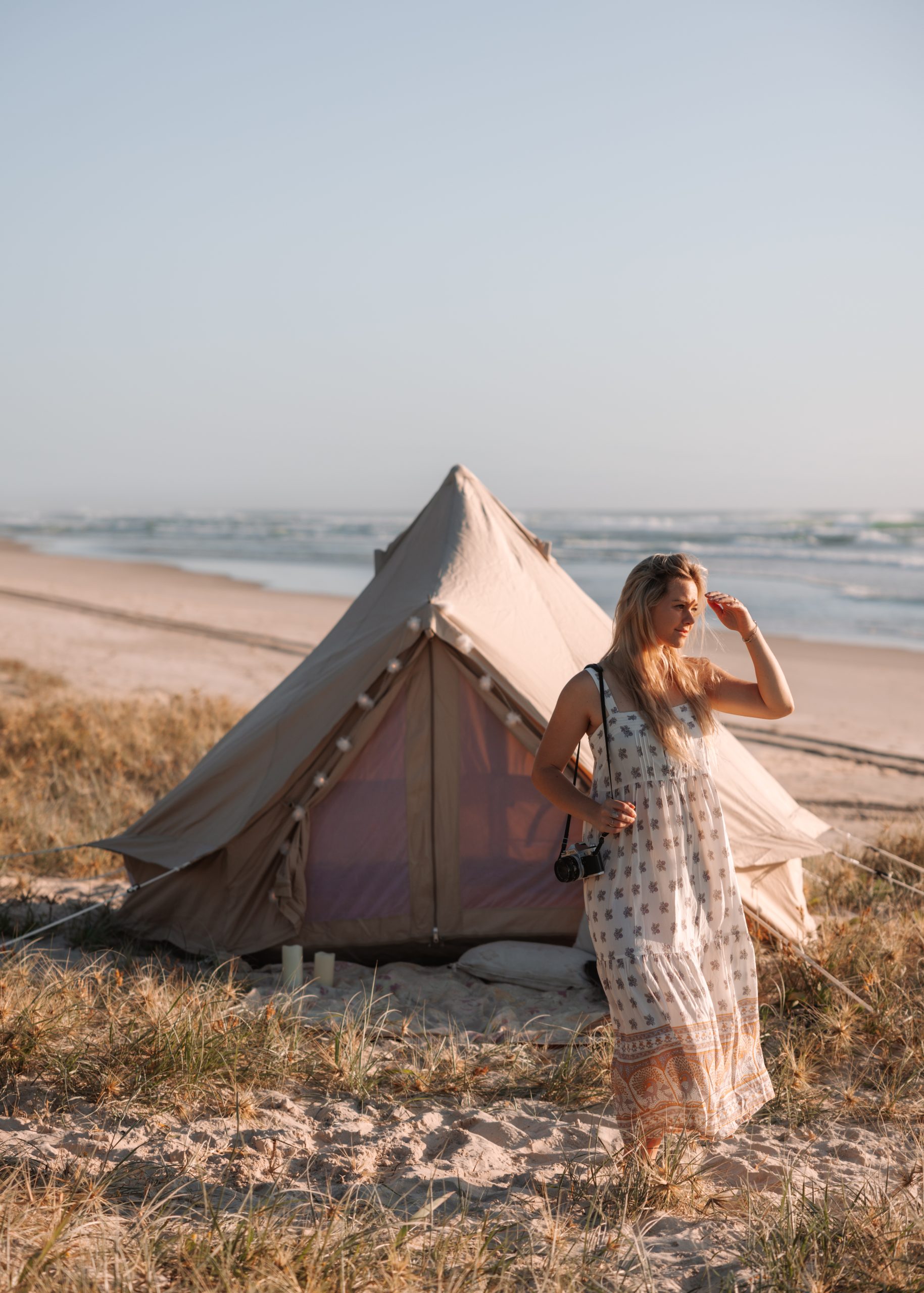
Consider the complete installed footprint
The diameter of the tent is not the total amount of land required. Guy ropes extend beyond the tent and must be included in site planning.
Allow adequate space for:
- The tent itself.
- Guy ropes, pegs and anchor points.
- Safe paths between tents.
- Decks, steps or accessible entrances.
- Outdoor bathrooms or private amenities.
- Landscaping and drainage.
- Emergency and maintenance access.
- Separation required by planning, fire or building authorities.
Short guy poles can help reduce the footprint in some installations, although every anchoring point must still be secured correctly. A scaled site plan is invaluable when determining how many tents can be accommodated without compromising privacy, safety or appearance.
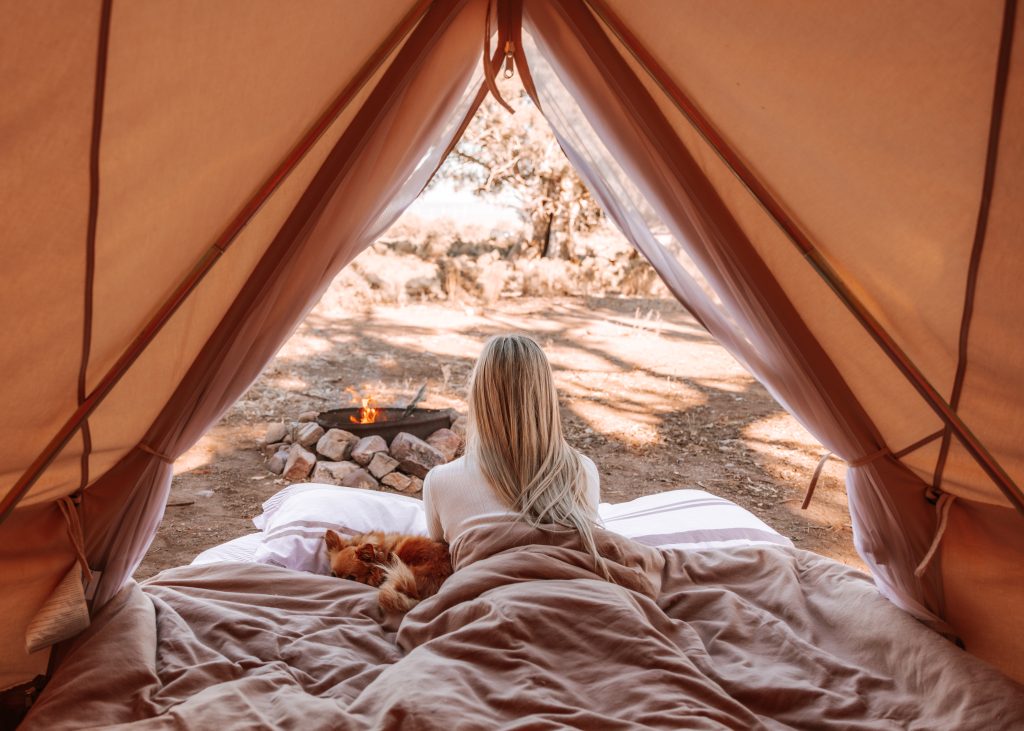
Plan for platforms, drainage and anchoring
Many commercial operators install bell tents on raised timber platforms. A well-designed platform can create a level guest space, improve drainage, reduce contact with damp ground and give the accommodation a more permanent, polished appearance.
The platform must be designed with the complete installation in mind. It needs enough space for the tent and any furnishings or outdoor seating, while guy ropes must be anchored safely beyond the tent walls. Tent attachment points should never be omitted simply because the tent is being installed on a deck.
For ground installations, consider the direction of water flow, soil condition, prevailing weather and whether the site becomes boggy after heavy rain. Avoid hollows where water may collect beneath the tent.
Any permanent or semi-permanent platform, ballast or anchoring system should be designed for the specific site and assessed by an appropriately qualified professional. Local council, planning, building and fire-safety requirements can differ considerably between projects.
Protect the canvas from sun and weather
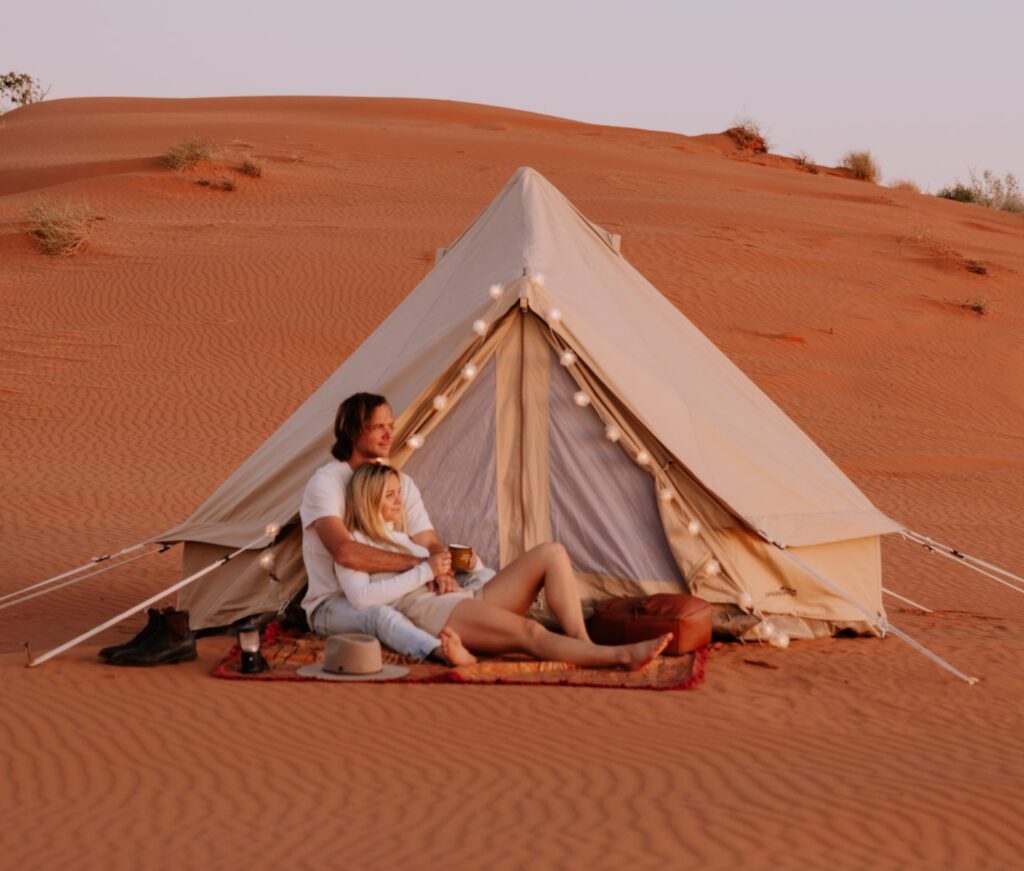
Australia’s ultraviolet exposure is a major consideration for any tent left pitched for extended periods. Even excellent canvas will benefit from protection and proactive maintenance.
A separate protector creates another layer between the tent and the elements. For longer-term and commercial installations, we generally recommend the CoolAir Protector. Its shade-sail-style mesh provides improved UV protection while creating an air gap above the canvas. This can help keep the tent cooler in summer and provides additional protection from environmental exposure.
A regular nylon protector is compact and useful as a rain jacket for recreational trips, but it is not our preferred choice for prolonged UV exposure.
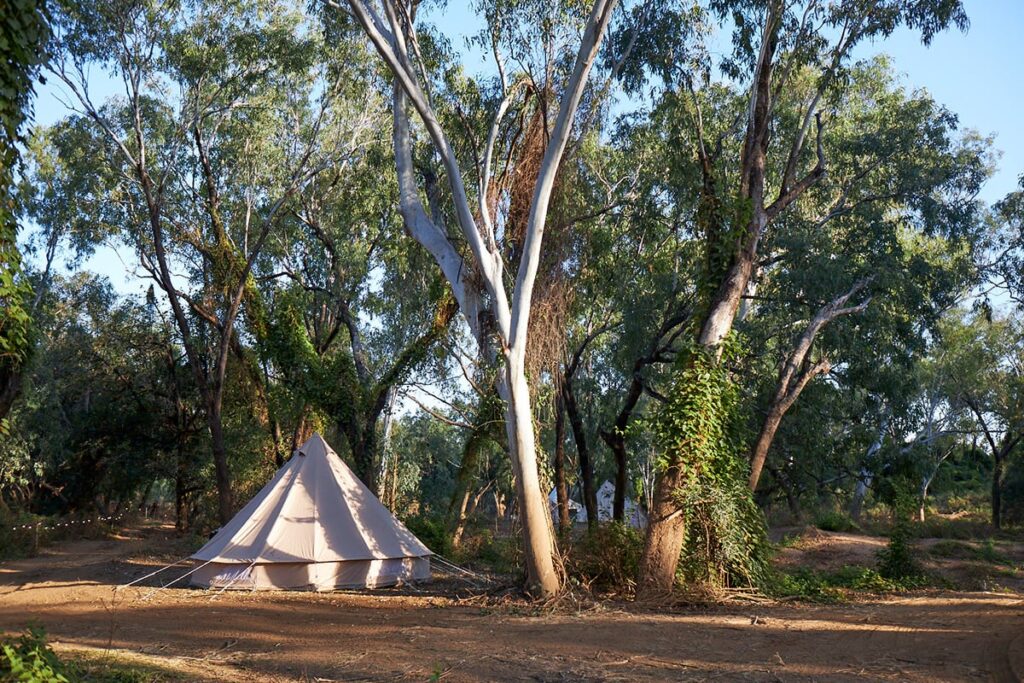
Trees can offer welcome shade, but tents should not be installed directly beneath unstable branches. Sap, leaves, bird droppings and persistent damp can also affect the canvas, so natural shade does not replace regular inspection and cleaning.
Make maintenance part of the business plan
Canvas accommodation is not maintenance-free. A successful glamping project should include inspections and upkeep in its operating procedures and financial forecasts.
The maintenance plan should cover:
- Regular checks of canvas, seams, zips, poles, pegs and guy lines.
- Prompt removal of dirt, leaves, droppings and organic matter.
- Good ventilation between guest stays.
- Prevention and early treatment of mould.
- Adjustment of guy-line tension after weather changes.
- Reproofing when required.
- Procedures for severe weather and periods when the site is closed.
- Storage instructions if tents are taken down seasonally.
Canvas should never be packed away damp. Small issues should also be addressed early, before they interrupt bookings or develop into larger repairs.
Think carefully about heating and climate control
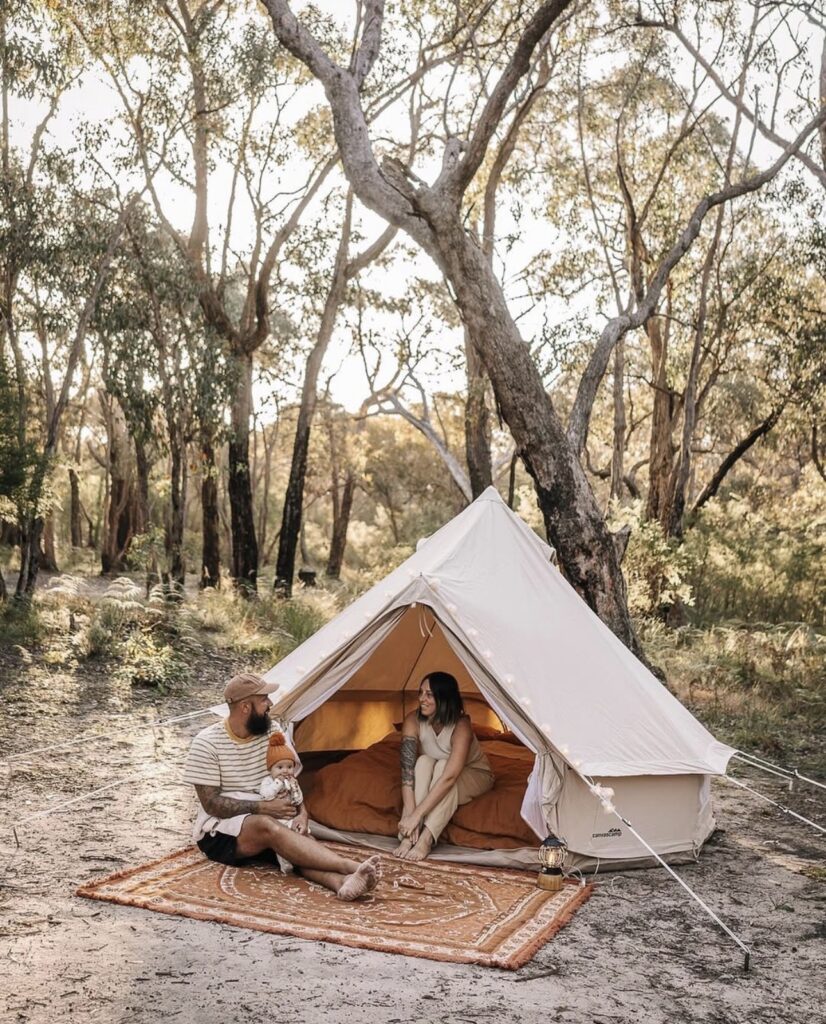
Guest comfort can extend the booking season, but heating, cooling and electrical installations require careful planning.
If a wood-burning stove is proposed, the tent must have a suitable stove opening and the correct flue protection, heatproof floor protection and clearances. Operators must also consider fire regulations, insurance requirements, guest instructions and supervision. A stove should never be improvised into a tent that was not designed to accommodate one.
Electrical heating, air conditioning, lighting and power outlets should be installed and assessed by qualified professionals. Consider power capacity, ventilation, condensation, weather protection and safe cable placement at the design stage rather than adding them as an afterthought.
Understand approvals, fire requirements and insurance
Council funding does not automatically mean every part of a project has received planning, building or operational approval.
Requirements may relate to:
- Land use and development approval.
- Building or platform construction.
- Bushfire and emergency planning.
- Fire-retardancy documentation.
- Accessibility.
- Wastewater and bathroom facilities.
- Food preparation.
- Electrical installations.
- Public liability and accommodation insurance.
- Evacuation routes and maximum occupancy.
Ask the relevant council, certifier, fire authority and insurer what documentation is required before ordering. If a particular canvas certification is mandatory, confirm that the exact tent model and fabric being supplied meet that requirement—do not assume that a general product description will be sufficient.
Evaluate appearance as well as performance
Glamping guests are purchasing an experience. The tent must feel special enough to inspire bookings while also fitting naturally into its surroundings.
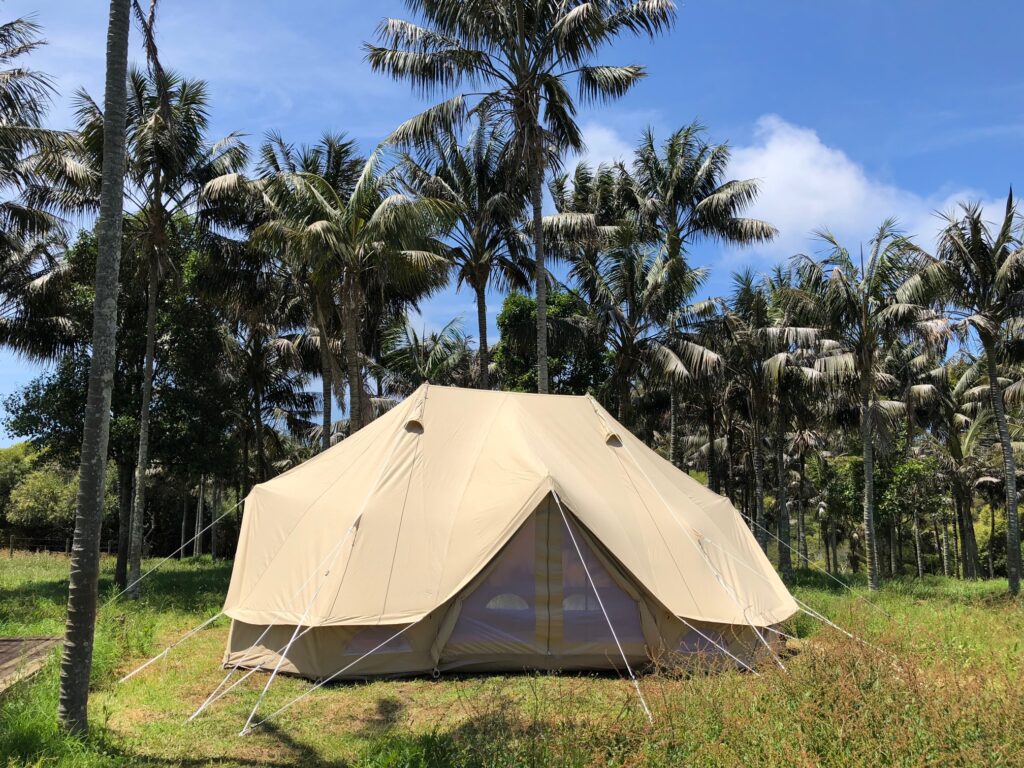
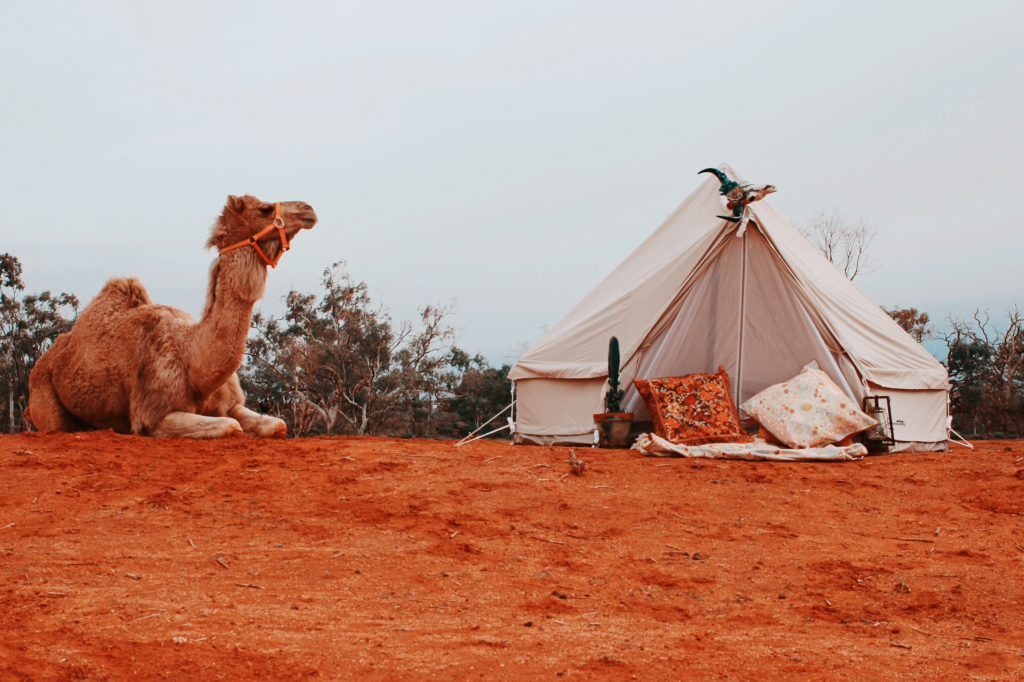
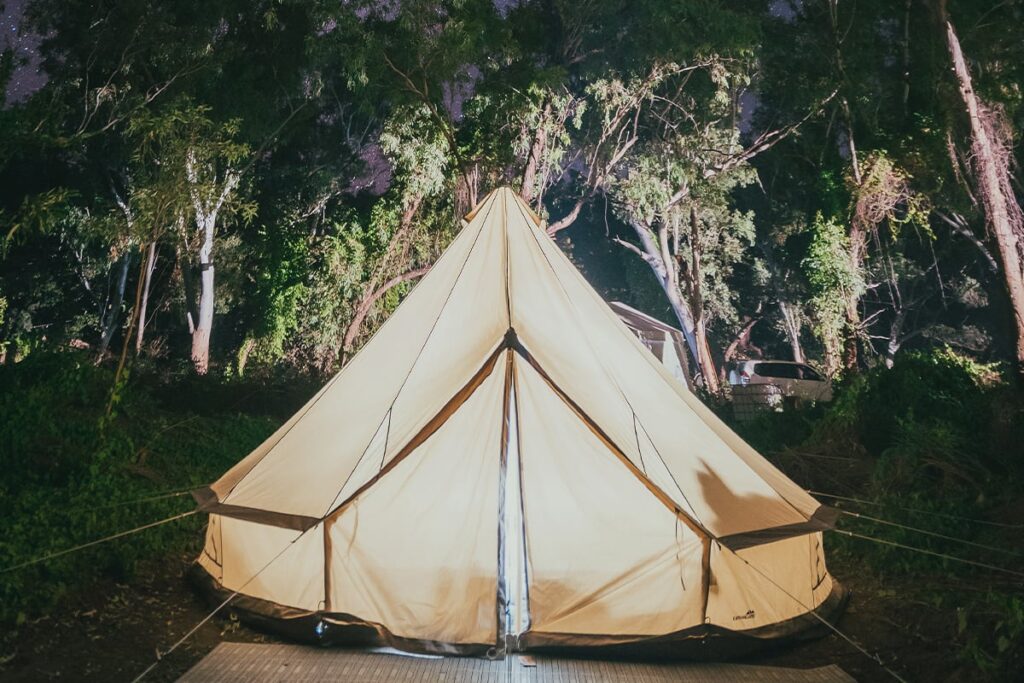
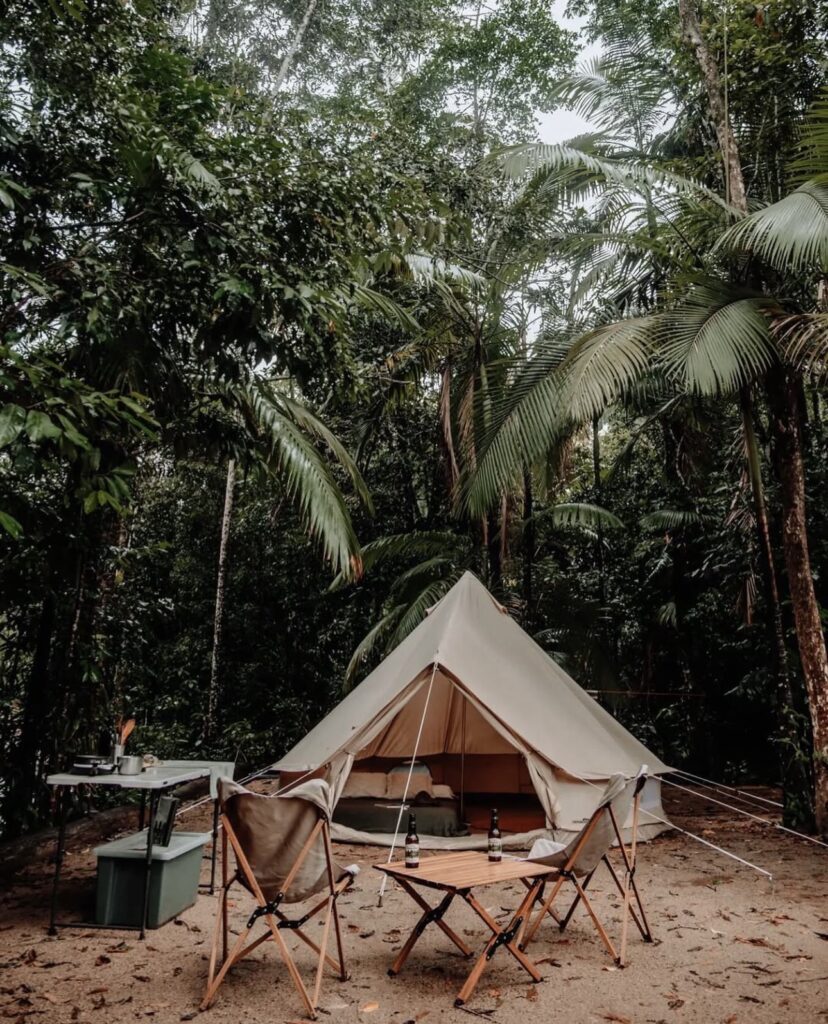
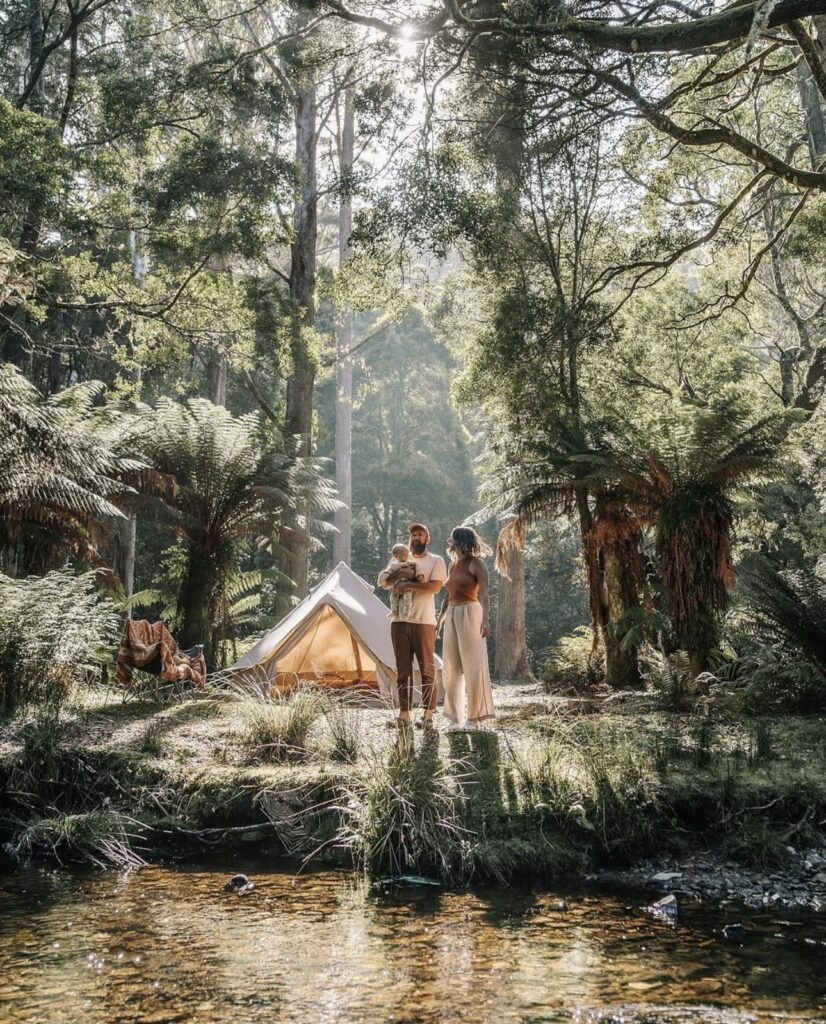
Traditional bell tents have a romantic, recognisable silhouette that works particularly well in bush retreats, farm stays, vineyards, wedding venues and nature-based destinations. Natural canvas tones blend into the landscape and provide a versatile backdrop for different interior styles.
Consider how the tents will appear in photographs from the moment guests arrive. Consistent platforms, pathways, furnishings, linen, lighting and landscaping can elevate a relatively simple structure into a premium accommodation experience.
However, appearance should not come at the expense of durability. The strongest commercial projects combine a beautiful guest-facing design with practical, serviceable infrastructure behind the scenes.

Start with a pilot installation when possible
Not every project needs to begin with a large number of tents. Installing one or two accommodation units first can allow an operator to test:
- Guest demand and achievable nightly rates.
- Preferred layouts and furnishings.
- Cleaning and changeover procedures.
- Weather performance at the chosen site.
- Maintenance requirements.
- Photography and marketing response.
- Feedback before the next stage is ordered.
A pilot installation can provide valuable evidence for councils, investors and future grant applications. It may also prevent an expensive mistake being repeated across an entire site.
Compare whole-of-life value, not simply price
When preparing a grant budget or procurement comparison, include more than the cost of the tent alone.
Consider the tent, protector, inner tent if required, flooring or rugs, platform, anchoring, furniture, installation, freight, maintenance, replacement parts and seasonal storage. Then assess these costs against the expected nightly rate, occupancy and useful working life.
A cheaper tent that needs early replacement, creates additional maintenance or produces guest complaints may ultimately be far more expensive than a well-supported commercial model.
Questions to ask a tent supplier
Before committing to a supplier, ask:
- Is this model recommended for commercial or extended use?
- What canvas and groundsheet materials are used?
- Which replacement parts are available?
- What maintenance does the tent require?
- Is a UV-protective cover available?
- What is the complete installed footprint?
- Can the tent be installed on a platform?
- What documentation or certification is available?
- What are the current lead and delivery times?
- Is commercial or volume pricing available?
- What warranty applies to this intended use?
- What support is available after the purchase?
Clear answers will help strengthen both your procurement decision and the supporting documentation provided to a council, funding body or investor.
Planning a commercial glamping project?
Breathe Bell Tents has supplied canvas tents in Australia since 2014. We work with glamping operators, caravan parks, farms, schools, wedding venues and other organisations seeking durable, attractive outdoor structures.
For professional and longer-term accommodation, the Apex Series offers the durability, practicality and classic beauty required for a serious glamping operation. We can help you compare tent sizes and configurations, select suitable accessories, understand site-footprint requirements and prepare a commercial quotation for your project.
If you are developing a council-funded glamping site, nature-tourism experience, farm stay or caravan-park expansion, contact Breathe Bell Tents to discuss your plans. Starting the conversation early can help ensure that the tent specification, site design and project budget work together from the outset.
Important: Information in this article is general only. Commercial accommodation projects should obtain project-specific advice and approvals from the relevant council, certifier, engineer, fire authority, electrician and insurer.