Bell Tents or Cabins? A Lower-Capital Way for Holiday Parks to Test Premium Accommodation
Across Australia, holiday parks, farm stays and regional tourism properties are looking for ways to increase the value of their accommodation offering.
Traditional campsites and powered caravan sites will always remain an important part of the market, but many operators are also exploring premium accommodation that can attract new guests, command a higher nightly rate and encourage longer stays.
Permanent cabins are one option—but they can require significant capital, infrastructure, construction and planning. For operators who want to test demand before committing to a major development, professionally presented bell tents can provide a more flexible starting point.
A small glamping offering allows a property to introduce a memorable new accommodation experience, assess how the market responds and gather real operating data before deciding whether to expand.

The growing demand for experience-led accommodation
Today’s guests are not only choosing where to sleep. They are choosing the experience they want to have.
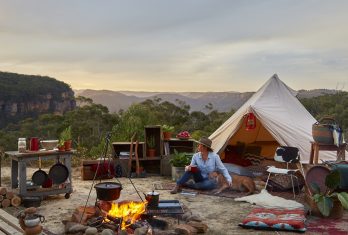
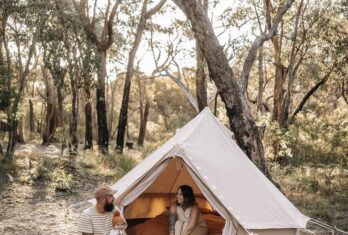
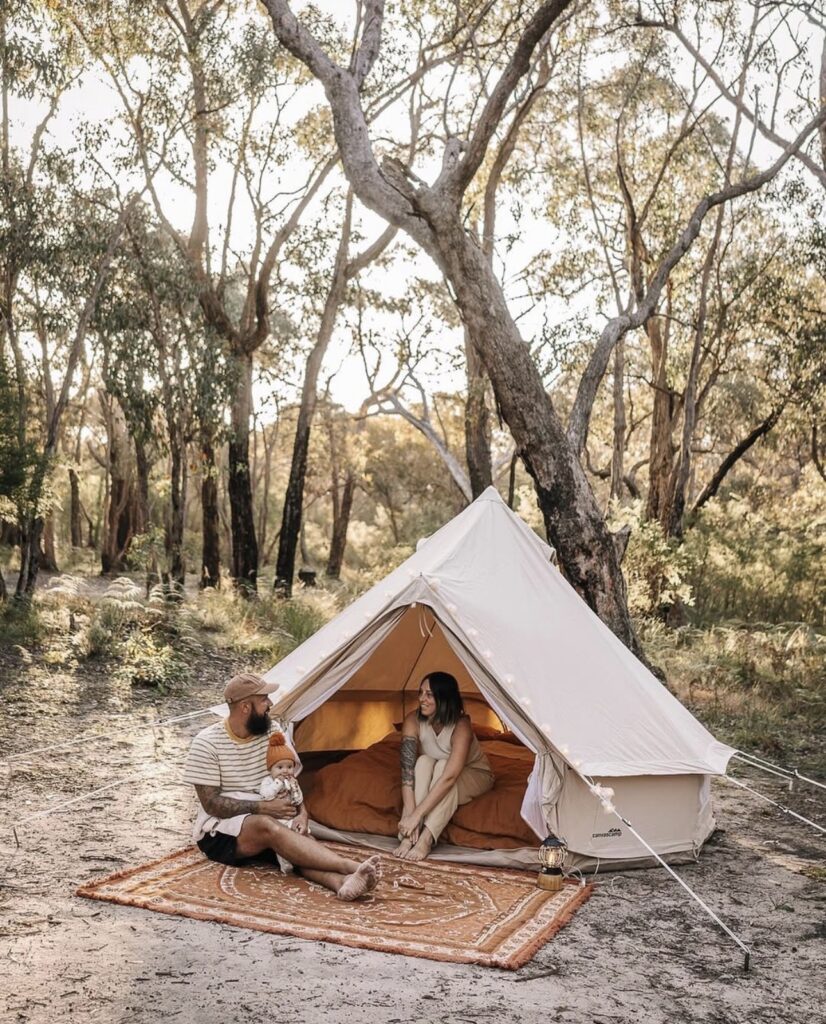
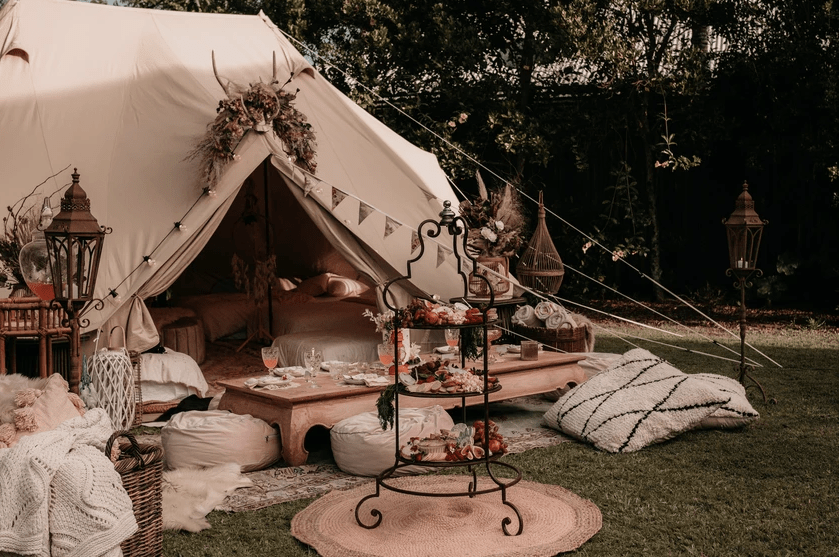
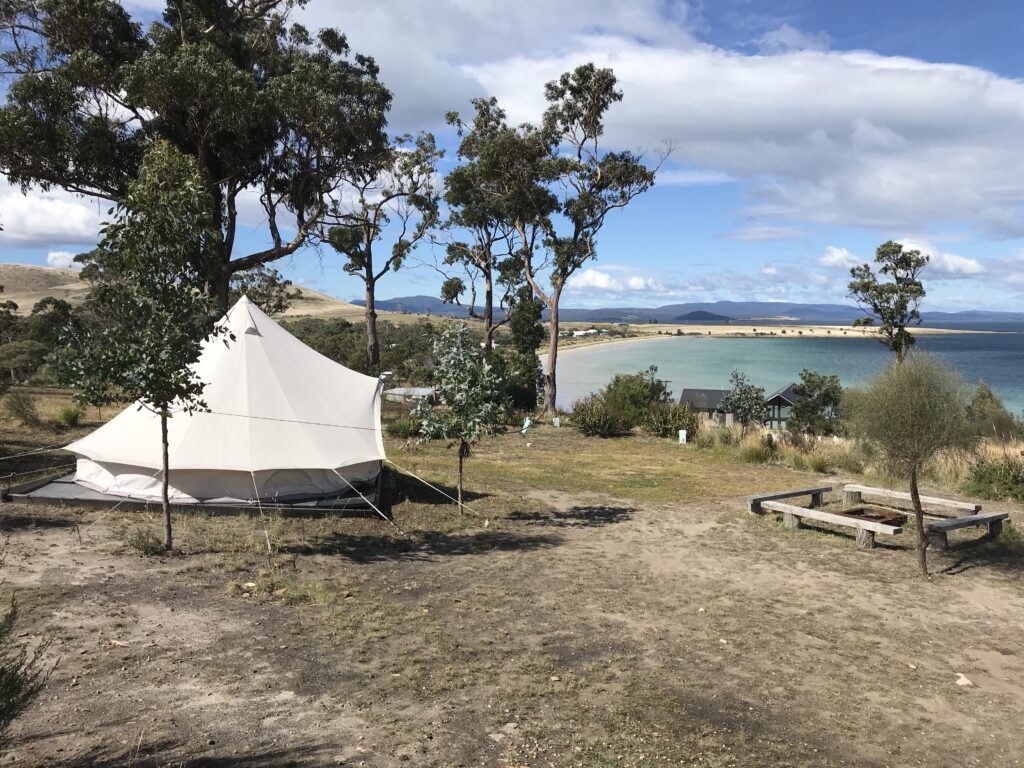
For some, that means waking up among gum trees, sitting beside a fire at sunset or enjoying the sounds of nature without giving up a comfortable bed and thoughtfully styled interior.
Bell tent accommodation sits between conventional camping and a permanent cabin. It offers a stronger connection to the landscape than a traditional building while still providing the comfort and presentation guests expect from a premium stay.
This makes bell tents particularly suited to:
- Holiday and caravan parks
- Farm stays
- Wineries and rural estates
- Nature-based tourism properties
- Wedding and event venues
- Retreat centres
- Campgrounds wanting to accommodate guests who do not own camping equipment
For established parks, bell tents can also introduce something visually distinctive without changing the character of the entire property.
Why not simply build cabins?
Cabins can be an excellent long-term investment, particularly where demand is already proven. However, building permanent accommodation can involve considerable upfront expenditure and a lengthy development process.
Depending on the project and location, operators may need to consider:
- Planning and building approvals
- Site preparation and foundations
- Power, water and wastewater connections
- Road and vehicle access
- Building contractors and construction schedules
- Landscaping and drainage
- Bushfire, flood or environmental requirements
- Accessibility and fire-safety obligations
- Furniture, appliances and interior fit-out
- Ongoing building maintenance
For an operator entering the glamping or premium-accommodation market for the first time, this can represent a substantial commitment before the property has established its likely occupancy, nightly rate or ideal guest profile.
Bell tents do not remove the need for proper planning, approvals or professional site preparation. However, they may allow an operator to begin with a smaller and more adaptable accommodation concept.
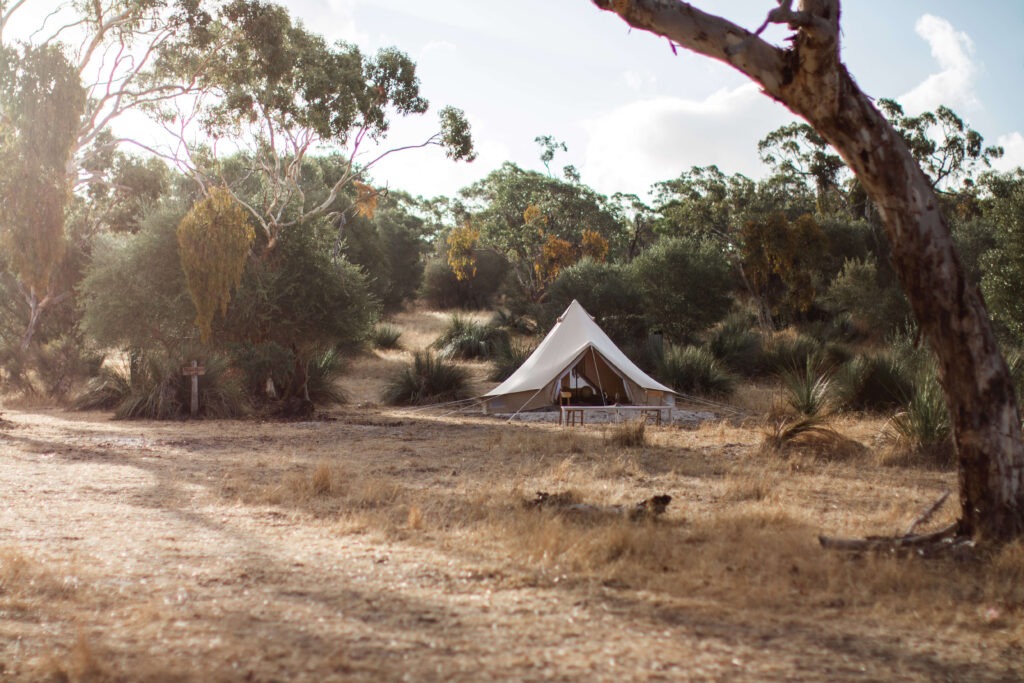
Start with one or two tents and test the market
One of the greatest advantages of a bell tent project is the ability to start at a manageable scale.
A park or farm stay may begin with one or two beautifully presented tents rather than launching a large development immediately. This provides an opportunity to test important commercial questions, including:
- Who is booking the accommodation?
- Are guests couples, families, groups or event attendees?
- Which nights and seasons are most popular?
- What nightly rate will the market accept?
- Which amenities matter most to guests?
- How long is the average stay?
- What feedback appears repeatedly in reviews?
- Does the experience attract guests who would not otherwise book the property?
- Is there sufficient demand to add more tents or invest in permanent accommodation?
These insights are far more useful than assumptions. A small initial offering can generate genuine booking data, guest feedback, professional photography and online reviews—all of which can help guide future investment.
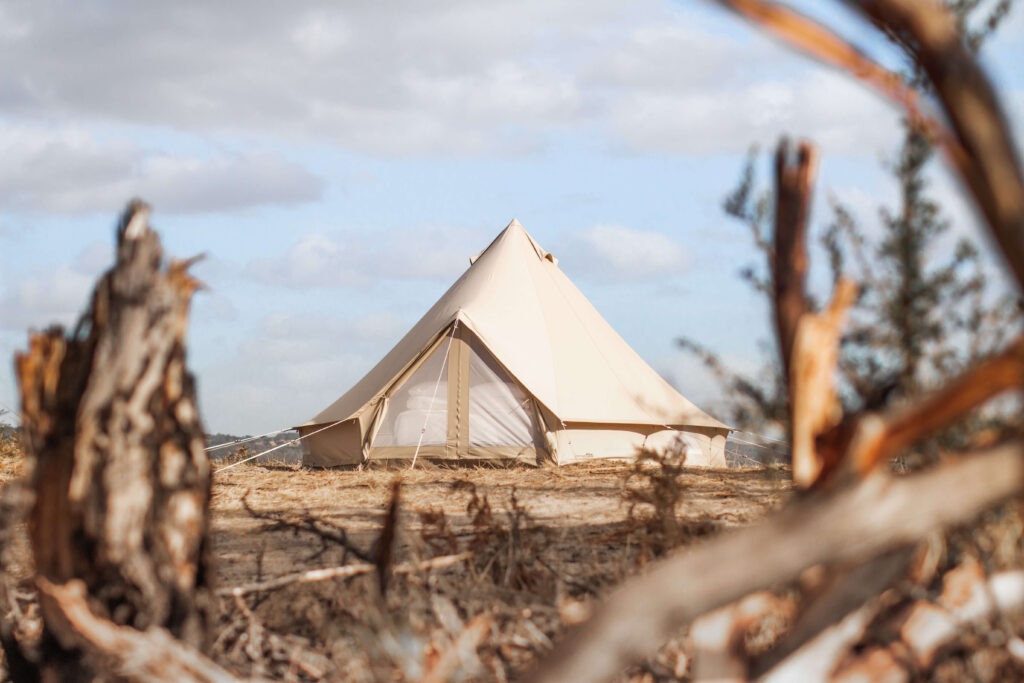
A lower-capital entry into premium accommodation
A commercial-quality bell tent still requires an appropriate budget. The tent itself is only one part of a successful guest offering.
Operators may also need to invest in:
- A suitable platform or prepared site
- Quality beds and commercial-grade mattresses
- Furniture and lighting
- Safe electrical installation
- Weather protection
- Bathroom facilities
- Paths, signage and landscaping
- Housekeeping systems
- Fire and emergency planning
- Professional photography and booking integration
Even with these requirements, a small bell tent development may represent a lower-capital way to introduce premium accommodation than constructing multiple permanent cabins.
This can be especially useful for regional businesses that want to grow carefully, preserve cash flow and expand in stages as demand becomes established.
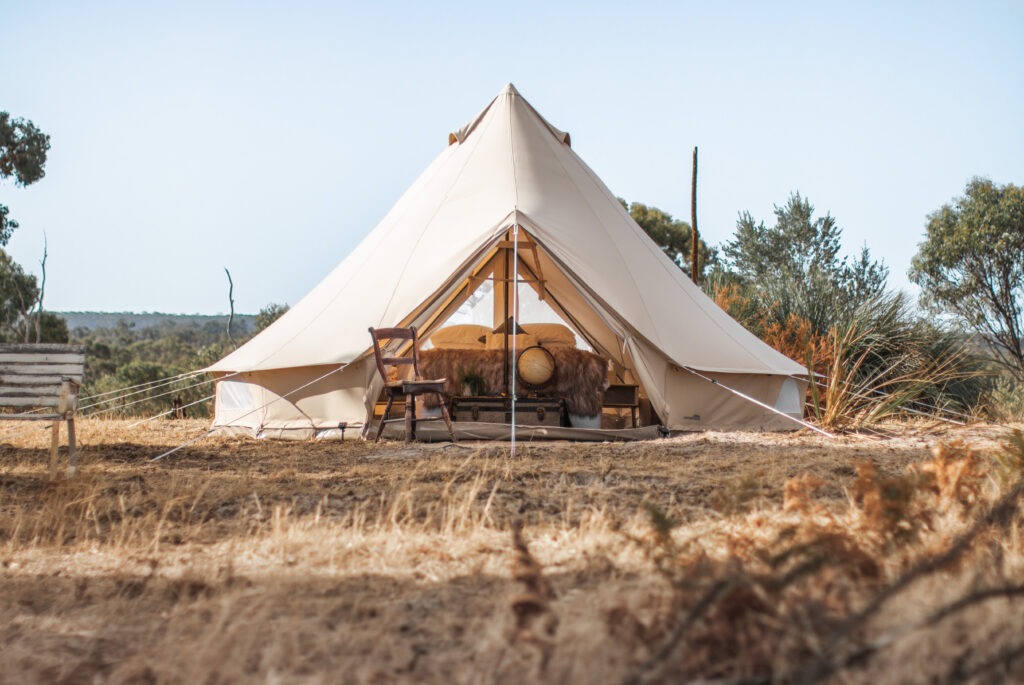
Flexibility as the business evolves
A bell tent offering can be adapted as an operator learns more about the market.
A tent initially intended for couples may later be configured for a family, retreat group or bridal party. An additional tent can be introduced during peak season, or the accommodation experience can be repositioned around wellness, food, nature, romance or adventure.
Depending on the site and applicable regulations, tents may also offer greater flexibility in their placement and seasonal use than permanent structures.
This does not mean a commercial tent should be treated as temporary camping equipment. Any tent intended for repeated guest use requires appropriate installation, regular inspection, maintenance and a clear operating plan.
The advantage is that the business may be able to refine the concept incrementally instead of committing to every detail at the beginning.
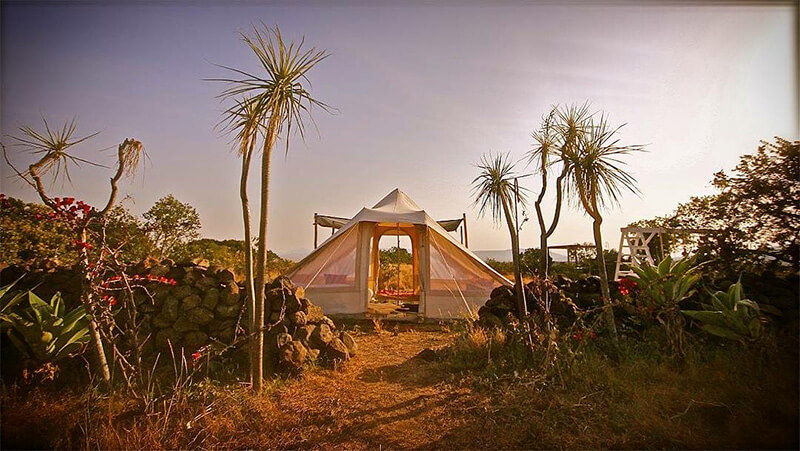
Bell tents can complement cabins—not necessarily replace them
The decision does not always need to be bell tents or cabins.
Many properties benefit from offering several accommodation styles at different price points. A holiday park might retain its caravan sites, offer cabins for guests seeking a conventional self-contained stay and introduce bell tents for those wanting something more atmospheric.
Bell tents can also help operators make use of areas where a cabin may feel visually intrusive, provided the location is safe, practical and approved for the intended use.
This blended approach allows a property to appeal to a broader range of guests while creating a more distinctive brand.
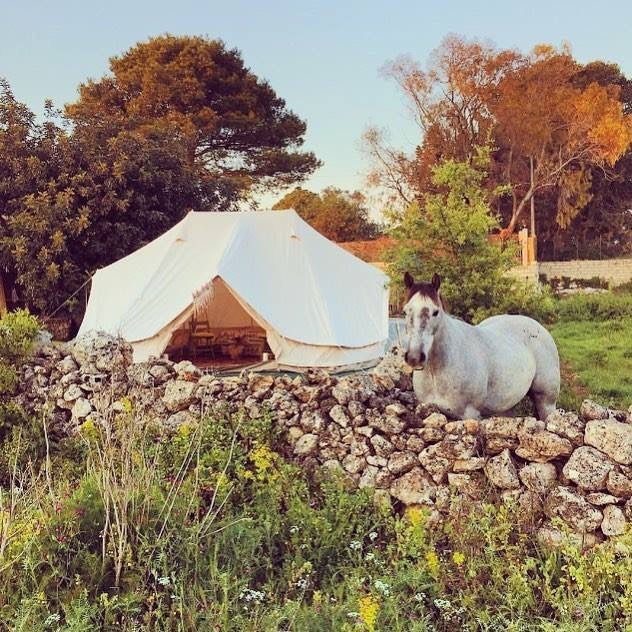
The importance of choosing a commercial-quality tent
A tent used for occasional family camping has a very different workload from one used as paid guest accommodation.
Commercial glamping tents may remain erected for extended periods and experience repeated exposure to sun, rain, wind, humidity and changing temperatures. They also need to withstand frequent guest turnover, cleaning and daily use.
When comparing tents for a commercial project, consider:
- Canvas type and weight
- Resistance to UV exposure
- Waterproofing and weather performance
- Ventilation and airflow
- Door configuration
- Groundsheet construction
- Space for beds and furniture
- Ease of cleaning and maintenance
- Availability of replacement poles and other parts
- Australian warranty and after-sales support
- Fire-retardancy documentation where required
- Suitability for the installation period and local climate
The lowest purchase price does not necessarily deliver the lowest operating cost. A tent that is difficult to maintain, uncomfortable in warm weather or poorly suited to extended installation can create additional work and undermine the guest experience.
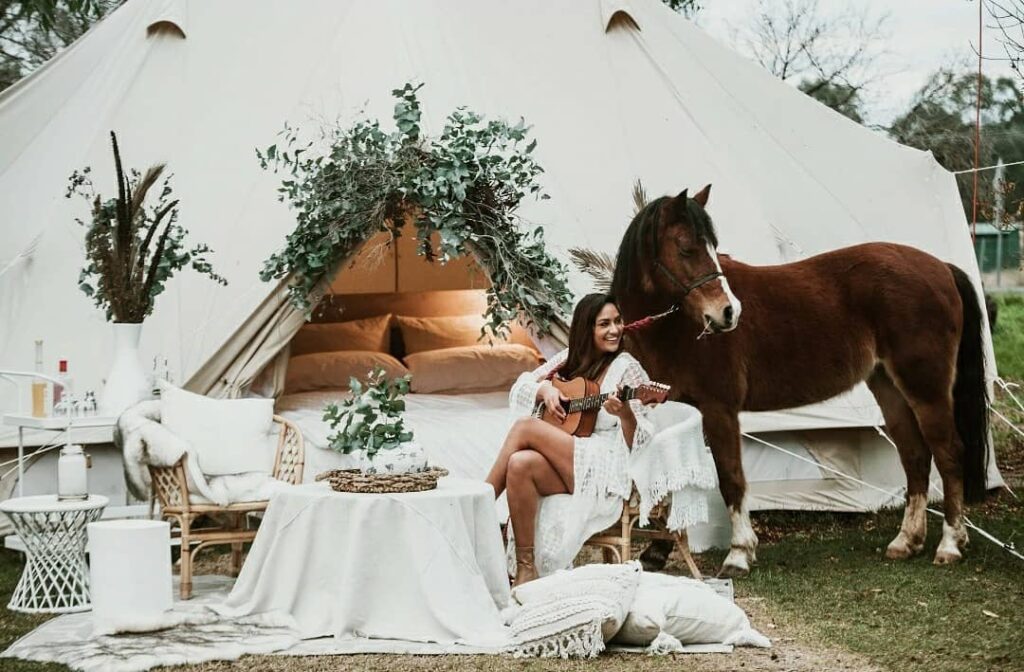
Why the Sibley Apex is designed for professional use
For commercial glamping projects and extended installations, Breathe Bell Tents generally recommends the CanvasCamp Sibley Apex range.
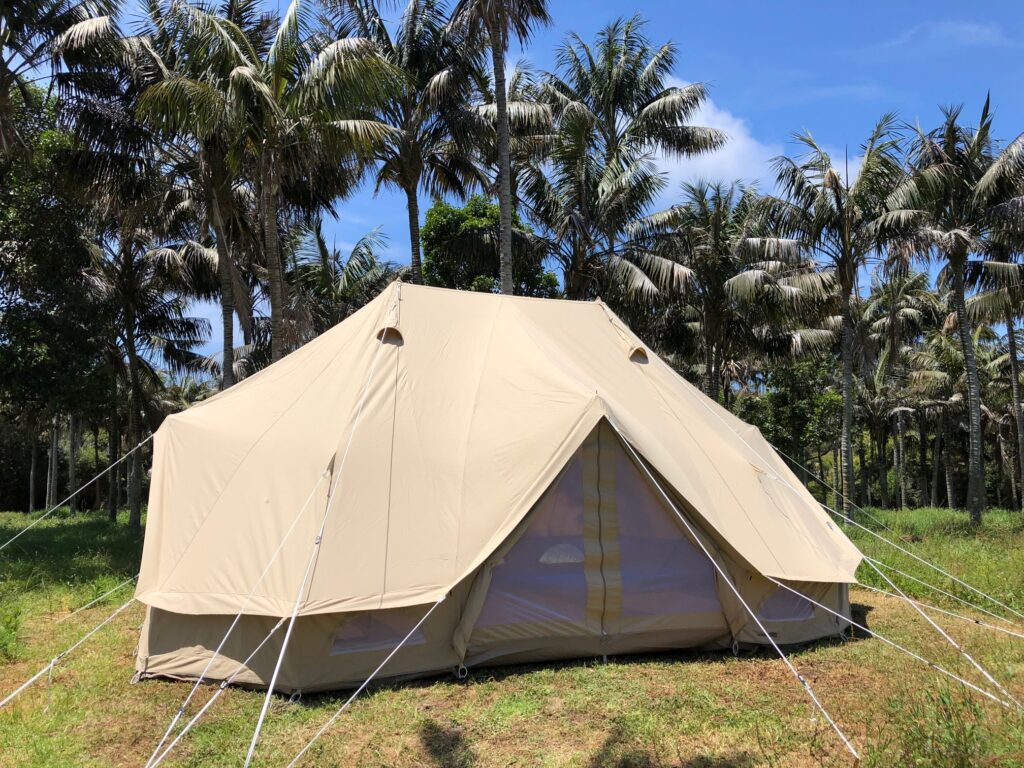
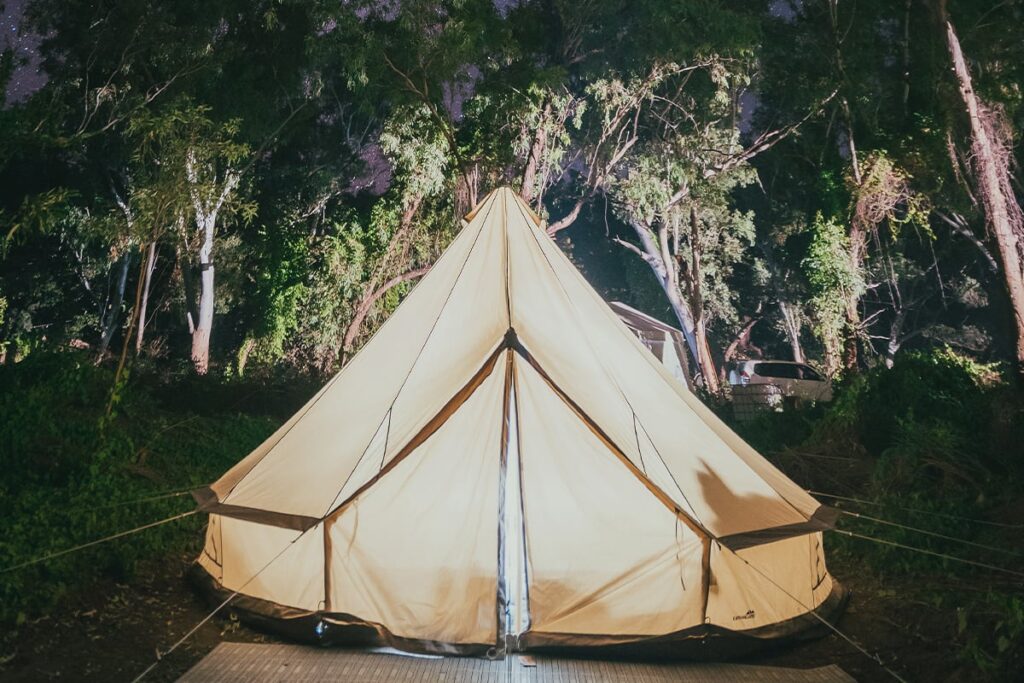
The Apex has been developed for demanding professional use and is manufactured from technical cotton canvas. Its spacious design, generous ventilation and durable construction make it particularly well suited to glamping operators, holiday parks and longer-term accommodation projects.
Double-door models provide additional airflow, flexible furniture placement and a more impressive sense of arrival. Larger sizes such as the Apex 600 Double Door offer enough room to create a genuine guest suite rather than simply placing a bed inside a tent.
Depending on the location and intended installation, we may also recommend:
- A CoolAir roof protector for additional protection from heat and UV exposure
- Short guy poles where the available footprint is limited
- A suitable raised platform
- Inner tents for flexible sleeping zones
- Coir flooring or rugs
- Regular maintenance and inspection procedures
The right combination will depend on the climate, terrain, guest capacity and length of installation.
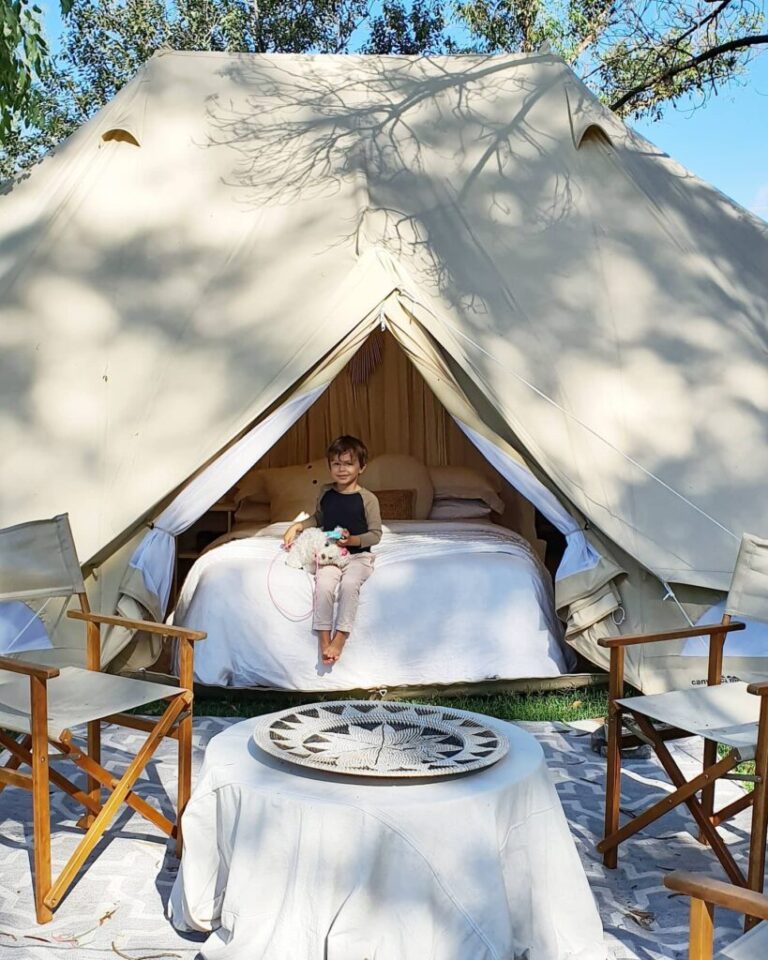
The platform and surrounding site matter
A successful glamping experience is not created by the tent alone.
The platform, landscaping, outdoor seating, lighting, privacy and pathway to the tent all influence how guests perceive the accommodation. Practical considerations such as drainage, wind exposure, vehicle access and housekeeping access are equally important.
A well-designed site should make the tent feel intentionally connected to its surroundings—not simply placed in an available space.
Before selecting a location, consider:
- Natural drainage and the direction of water flow
- Prevailing winds
- Shade and exposure to the sun
- Distance from amenities
- Guest privacy
- Safe access after dark
- Emergency and maintenance access
- Vegetation and falling-branch risks
- Bushfire and flood exposure
- The space required for guy ropes and safe circulation
Breathe Bell Tents can provide tent dimensions and footprint guidance, but site design and construction should be undertaken with suitably qualified local professionals.

Do bell tents require council approval?
Requirements vary between states, councils, properties and types of operation.
A structure being described as a “tent” does not automatically make it exempt from planning, building, fire-safety, health or accommodation regulations—particularly if it will remain erected or be used as paid accommodation.
Factors that may affect the requirements include:
- How long the tent will remain installed
- Whether it is fixed to a platform
- The number of accommodation units
- The presence of power, plumbing or bathrooms
- The zoning and existing use of the property
- Wastewater arrangements
- Fire access and evacuation requirements
- Bushfire, flood or environmental overlays
- Whether food or additional guest services will be provided
Before purchasing tents or commencing site work, operators should speak with their local council and obtain advice relevant to their property and proposed use.
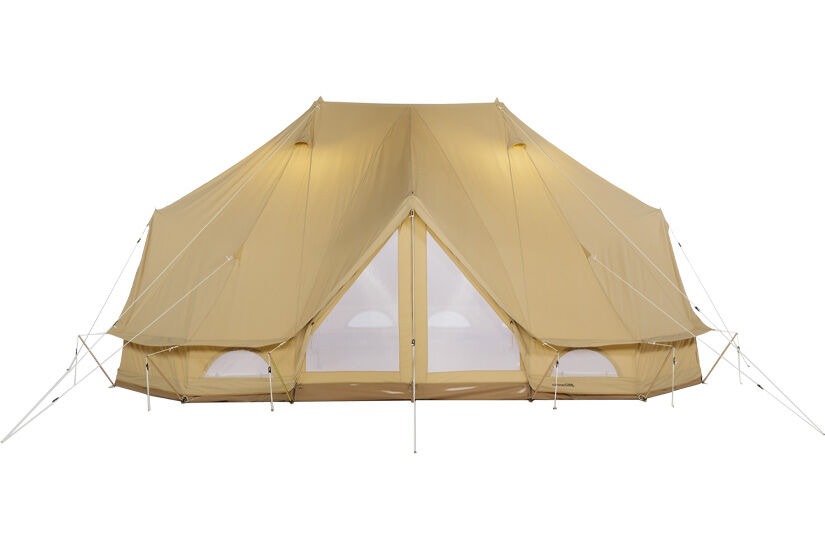
Build a business case before building at scale
The most successful glamping projects are usually based on more than attractive photographs.
Before expanding, review:
- Occupancy by month and day of the week
- Revenue per available tent
- Cleaning and linen costs
- Maintenance time and replacement costs
- Booking-channel commissions
- Guest acquisition costs
- Average length of stay
- Seasonal closure periods
- The most common review comments
- Guest requests for additional facilities
- Whether the accommodation is attracting a new audience
If one or two tents are consistently booked and generating strong reviews, the operator has meaningful evidence to support the next stage of the project.
That might mean adding more Apex tents, improving shared amenities, creating private bathrooms—or proceeding with permanent cabins as part of a broader accommodation mix.
A considered way to begin
Bell tents are not a shortcut to a successful tourism business. They still require careful planning, an appropriate site, a quality product and consistent attention to the guest experience.
What they can provide is a more considered way to enter the premium outdoor-accommodation market.
By beginning with one or two professional tents, a holiday park, farm stay or regional property can test demand, develop its accommodation concept and build a body of guest reviews before committing to a much larger permanent development.
For some businesses, bell tents may become a long-term and distinctive part of the property. For others, they may provide the evidence needed to confidently move into cabins or a combination of accommodation types.
Either way, starting at a manageable scale allows the next investment decision to be based on genuine experience rather than guesswork.
Planning a commercial glamping project?
Breathe Bell Tents has supplied canvas tents to glamping businesses, holiday parks, farms, venues and outdoor-accommodation operators across Australia.
We can help you compare tent sizes and models, understand the space required and select suitable accessories for your intended installation.
Commercial pricing may be available for eligible projects.
Contact Breathe Bell Tents to discuss your property and request a quotation.
Further Reading
Planning a glamping, holiday park or nature-tourism project? These guides may also be helpful:
- Can You Start a Glamping Business with Just One or Two Tents?
- Do You Need Council Approval for a Glamping Tent? What Australian Operators Should Check Before Investing
- Choosing Tents for a Council-Funded Glamping or Nature-Tourism Project
- How Canvas Accommodation Can Sit Lightly Within a Nature-Based Tourism Project
- Wooden Platform Bases for Bell Tents
- The Complete Bell Tent Buying Guide