How Canvas Accommodation Can Sit Lightly Within a Nature-Based Tourism Project
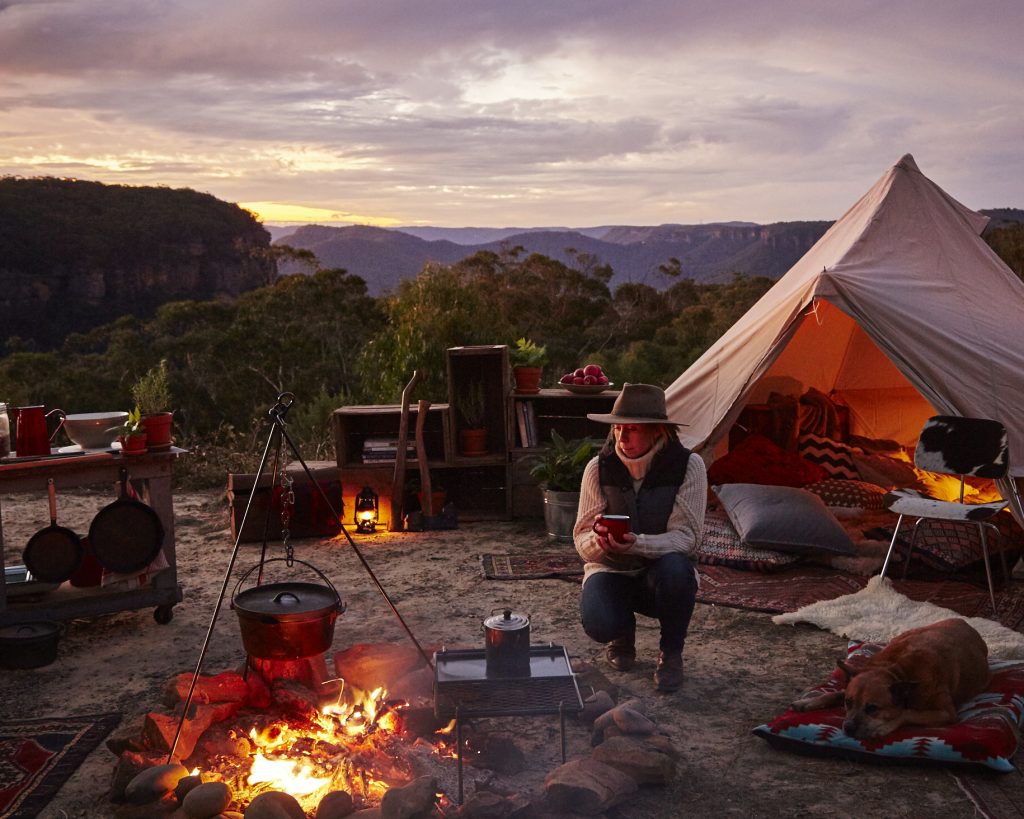
Nature-based accommodation works best when the landscape remains the main attraction.
Guests are not travelling to a forest, farm, coastline or mountain setting simply to spend the night in a conventional room. They want to feel connected to the environment: to hear wildlife, watch the weather change, see the stars and wake within a landscape that feels very different from everyday life.
Canvas accommodation can help create this connection.
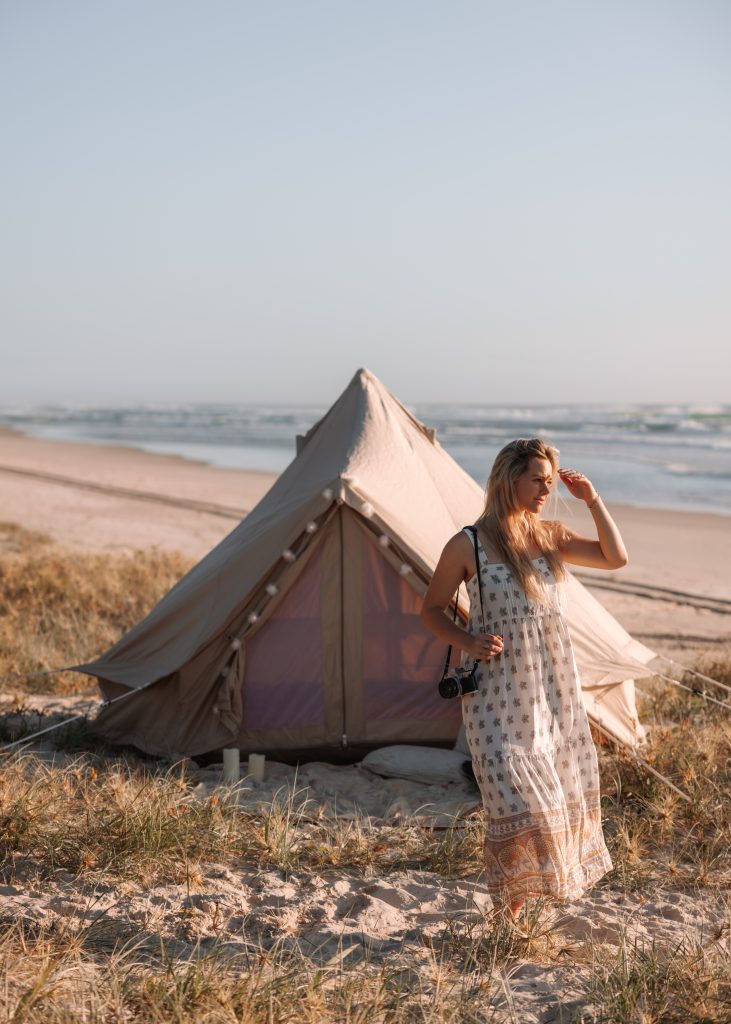
A thoughtfully positioned bell tent offers shelter and comfort while retaining the atmosphere of being outdoors. It can also provide a flexible alternative to conventional cabins for farm stays, eco-retreats, caravan parks, wineries and regional tourism projects.
However, placing a canvas tent in nature does not automatically make a tourism development sustainable or low impact.
The environmental effect of any accommodation project depends on the entire plan: where it is positioned, how the site is accessed, how water and wastewater are managed, where energy comes from, how biodiversity is protected and what happens to the infrastructure at the end of its useful life.
Here is how canvas accommodation can form part of a considered nature-based tourism project.
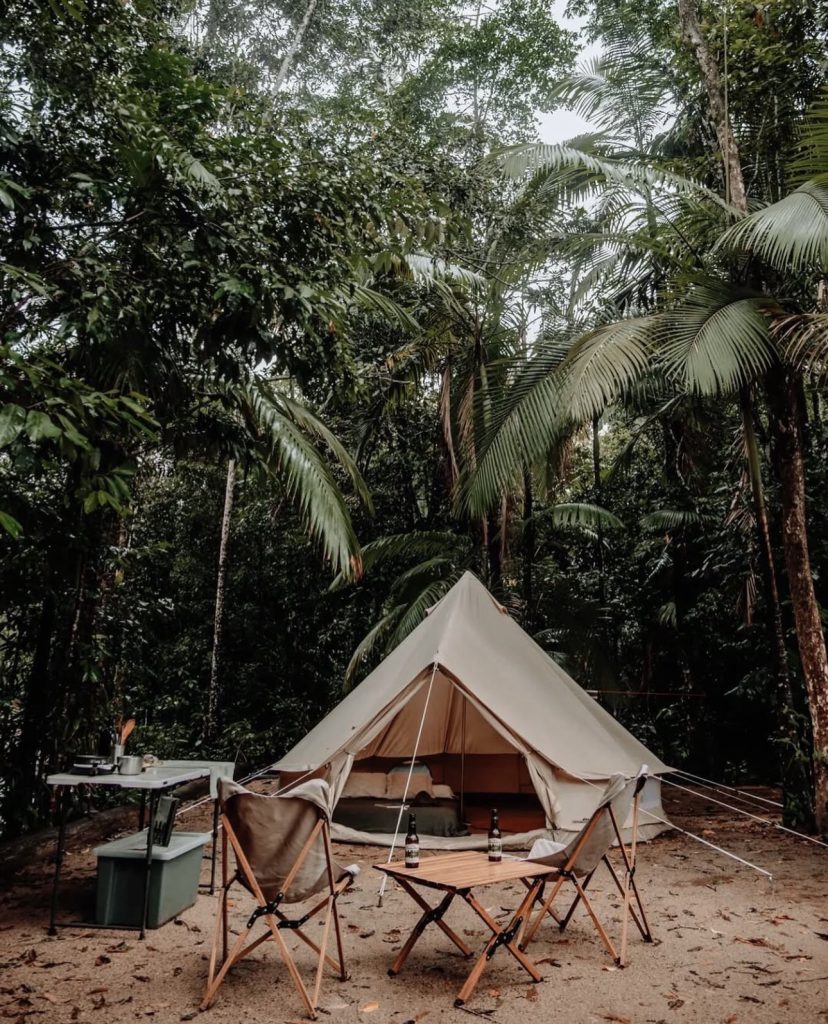
Begin with the landscape
The first question should not be, “Where will the tent look best in photographs?”
It should be:
Where can accommodation be introduced with the least disturbance to the land?
A beautiful view is important, but site selection must also consider:
- Existing vegetation
- Wildlife habitats and movement corridors
- Soil stability
- Natural drainage
- Flooding and overland water flow
- Bushfire risk
- Prevailing winds
- Exposure to storms
- Overhanging or unsafe trees
- Existing tracks and disturbed areas
- Access for guests, cleaners and emergency services
- Cultural and heritage significance
- Privacy from neighbours and other guests
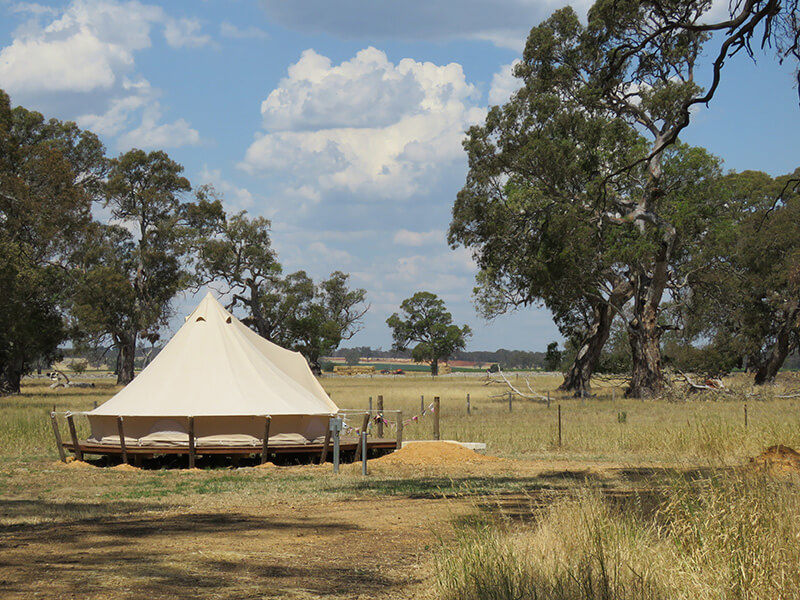
Previously disturbed land may sometimes provide a better location than clearing vegetation to create a more dramatic view.
Where possible, work with the natural shape of the site. Avoid unnecessary levelling, excavation or removal of established plants. A tent that sits comfortably within the landscape will often feel more appealing than one imposed upon it.
Qualified planning, environmental, bushfire, engineering and cultural-heritage advice may be required before choosing the final location.
Understand that portable does not mean exempt
Bell tents are portable structures, but this does not necessarily mean they can be installed and used as paid accommodation without approval.
Requirements vary according to the state, local council, land zoning and nature of the project. They may be affected by:
- The number of tents
- How long the tents remain erected
- Whether platforms are constructed
- Plumbing and electrical installations
- Guest numbers
- Access and parking
- Food services
- Bathrooms and wastewater
- Bushfire, flood or environmental overlays
- Existing approved uses of the property
Discuss the proposal with the relevant council and insurer before purchasing tents or completing substantial site works.
Our guide, Do You Need Council Approval for a Glamping Tent?, explains the questions Australian operators should investigate before committing to a project.
Breathe Bell Tents can provide product information and commercial quotations, but only the relevant authorities and qualified professionals can determine what is permitted on a particular site.
Start at a scale the property can support
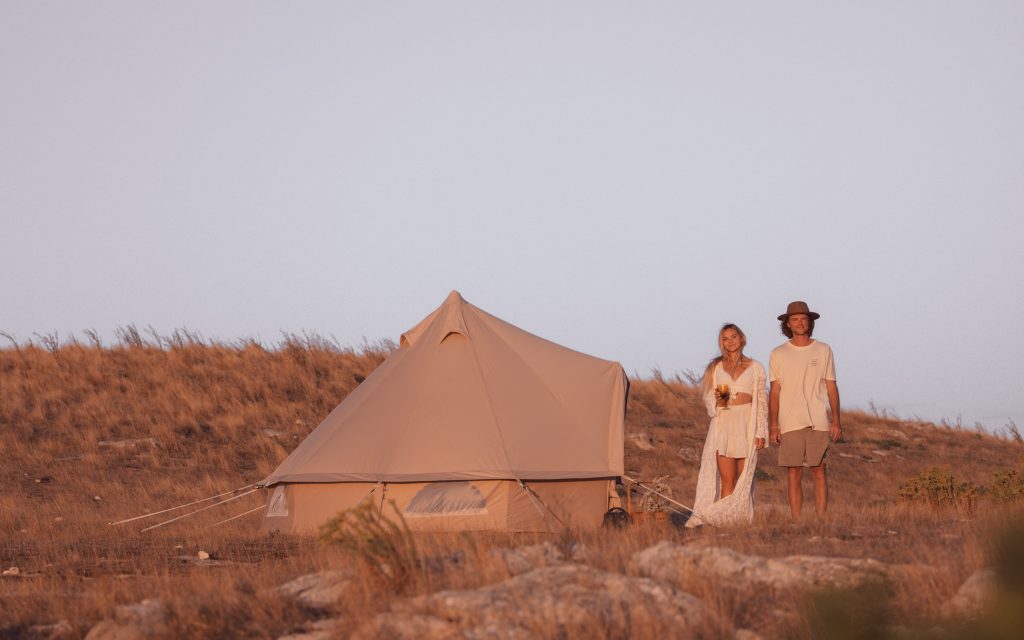
Nature-based accommodation does not need to begin as a large resort.
One or two well-positioned tents may allow an operator to test:
- Genuine guest demand
- Seasonal occupancy
- Cleaning and maintenance requirements
- Water and energy consumption
- Traffic and parking impacts
- The effectiveness of booking channels
- How guests interact with the environment
- Whether the experience can operate without disturbing neighbours
- Which amenities guests value most
Staged development can reduce unnecessary investment and disturbance. If the first accommodation units perform well, further tents can be considered with the benefit of real operating data.
Expansion should not come at the expense of privacy, habitat, landscape character or the quality of the guest experience.
Read more: Can You Start a Glamping Business with Just One or Two Tents?
Consider reversible infrastructure
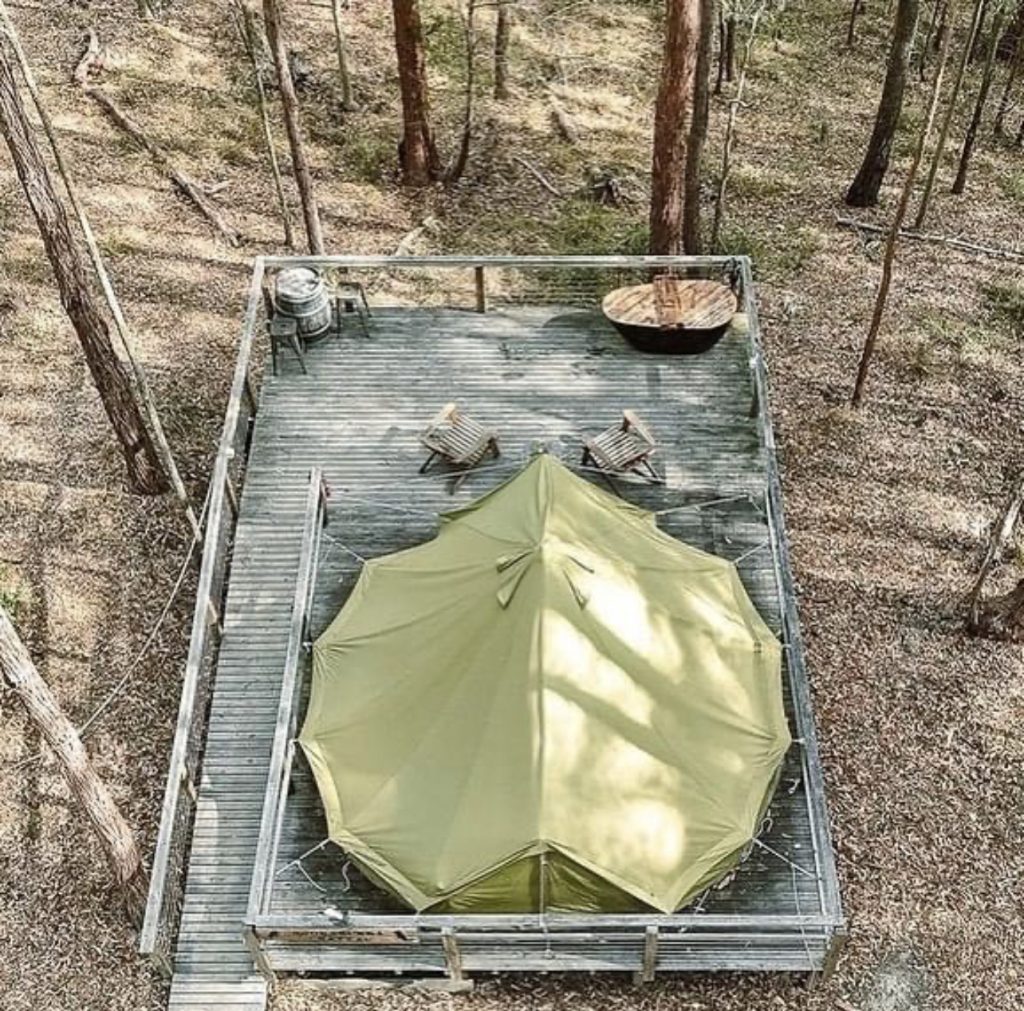
One of the potential advantages of canvas accommodation is that the main structure can be removed, repaired or replaced without demolishing a conventional building.
That does not mean the entire development is automatically reversible. Platforms, bathrooms, roads, retaining walls, power trenches and wastewater systems may have a much more permanent effect on the land than the tent itself.
A genuinely lighter approach may include:
- Using existing access routes
- Minimising excavation
- Avoiding extensive concrete foundations where suitable alternatives are approved
- Designing platforms around existing site features
- Using modular or demountable components
- Consolidating services where appropriate
- Keeping paths narrow and permeable
- Limiting unnecessary exterior lighting
- Planning how infrastructure could eventually be removed
- Rehabilitating disturbed areas after construction
Any platform, anchoring or structural solution must still be designed for the site and intended use. Reversible should never mean unstable, improvised or non-compliant.
Use platforms thoughtfully
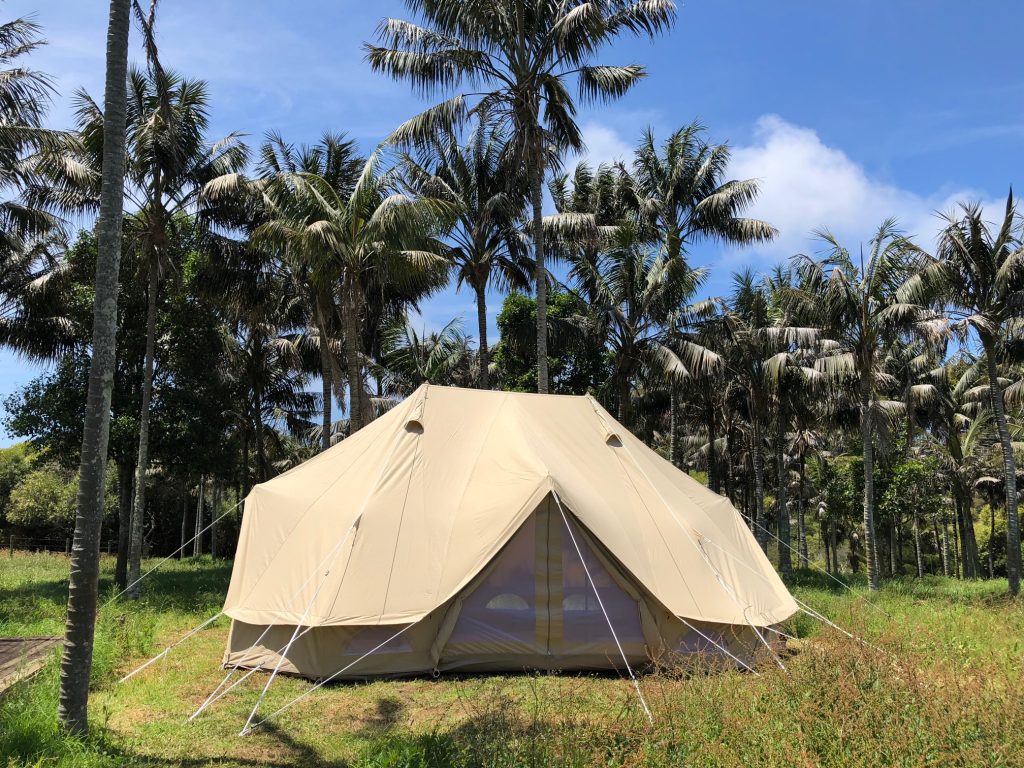
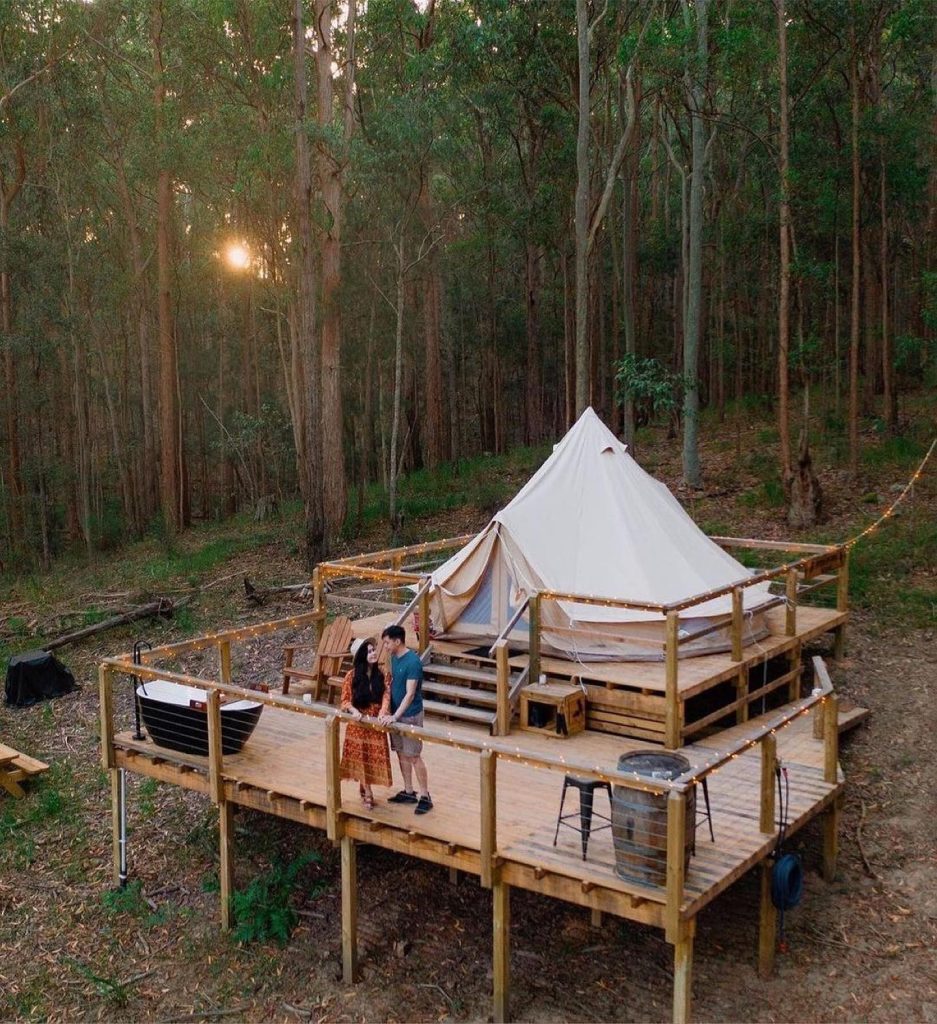
A raised timber platform can provide several practical benefits for extended-use canvas accommodation.
It may:
- Improve airflow beneath the tent
- Separate the groundsheet from damp soil
- Create a level surface
- Simplify housekeeping
- Reduce mud entering the tent
- Provide an attractive outdoor deck
- Help define paths and guest areas
- Accommodate insulation in colder climates
However, platforms also require materials, footings, labour and disturbance to the site. Their size and construction should therefore be carefully considered.
Avoid building an unnecessarily large platform merely to create visual impact. Design it around the practical requirements of the tent, guy ropes, guests, furniture and maintenance staff.
Remember that a bell tent must be correctly secured. Its anchoring system remains essential when it is installed on a platform.
The platform and anchoring method should be designed by appropriately qualified professionals for the local ground conditions, weather exposure and intended commercial use.
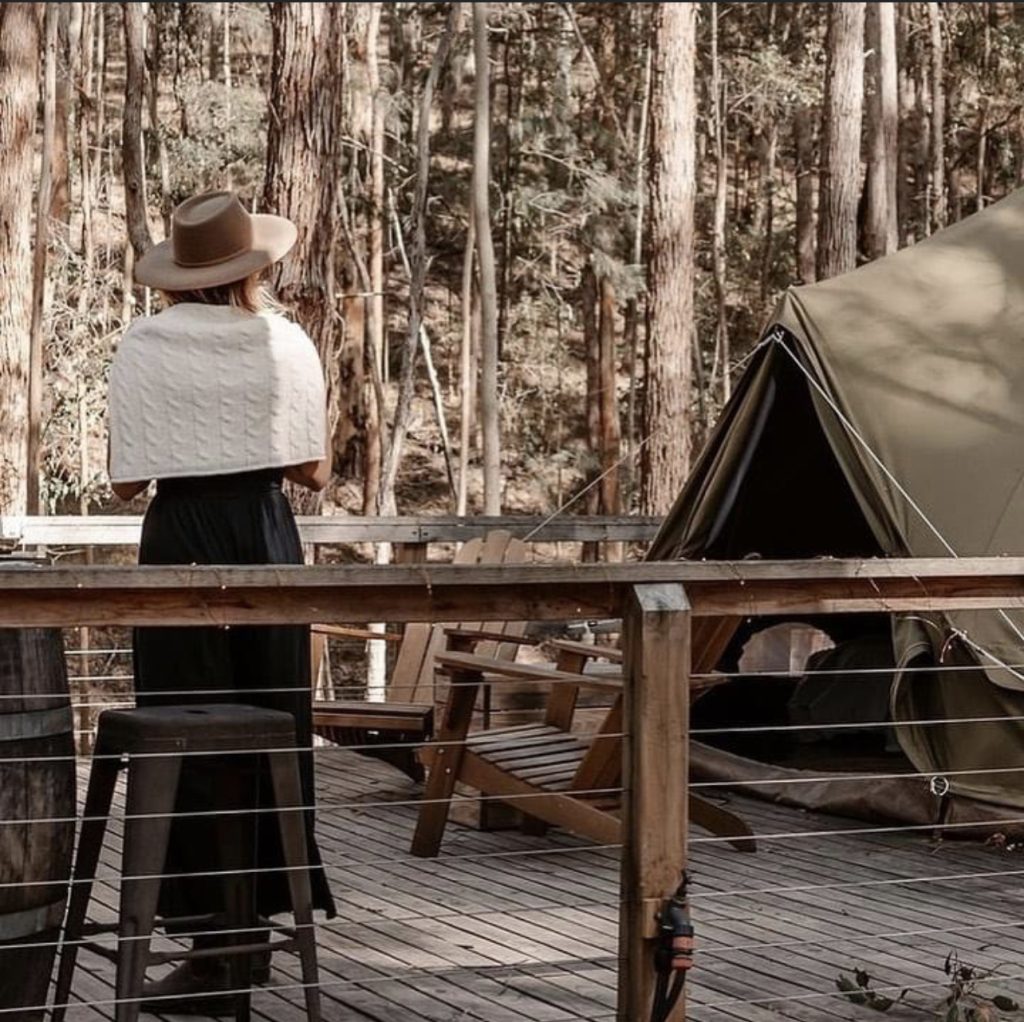
Protect natural drainage
Water management is one of the most important—and frequently underestimated—parts of a glamping project.
A tent should not be positioned in a hollow, across a natural drainage path or where stormwater is likely to collect beneath it.
Poor drainage can result in:
- Water pooling
- Muddy guest paths
- Mould and moisture problems
- Damage to platforms and flooring
- Erosion
- Unnecessary maintenance
- An uncomfortable or unsafe guest experience
Observe the property during heavy rain before finalising the site wherever possible.
Well-planned drainage should work with the existing landscape and avoid simply diverting water towards neighbouring land, waterways or sensitive vegetation.
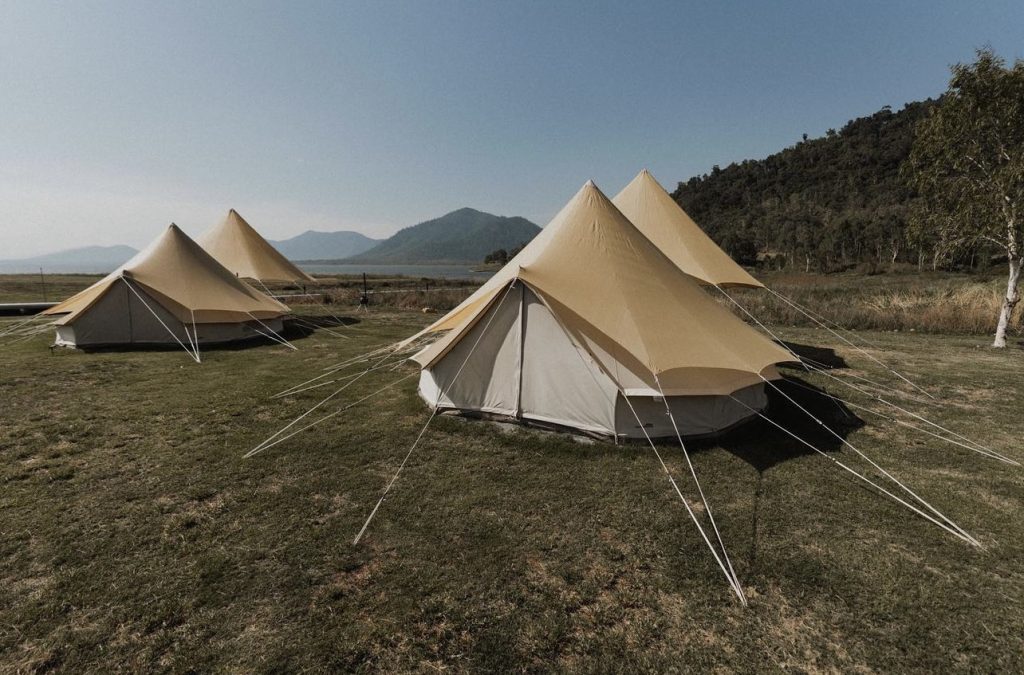
Plan water and wastewater before styling
Outdoor baths, private ensuites and hot showers can add enormous appeal to a nature-based stay, but they also introduce serious infrastructure responsibilities.
Before deciding on guest facilities, determine:
- How potable water will be supplied
- How much water each stay is likely to consume
- Whether rainwater can be collected and used lawfully
- How hot water will be produced
- How toilets and showers will operate
- How wastewater will be treated
- Whether the soil and site are suitable for the proposed system
- What council and health approvals are required
- How the system will be accessed and maintained
A beautiful outdoor bathroom is not low impact if wastewater is poorly managed or water consumption is excessive.
The most appropriate solution will vary between properties. Engage suitably qualified specialists early, before the bathroom design becomes central to the marketing concept.
Reduce energy demand through good design
Canvas is naturally breathable, helping create a more comfortable interior than many non-breathable synthetic structures. Good siting and ventilation can further reduce dependence on mechanical heating and cooling.
Consider:
- Morning and afternoon sun
- Natural shade
- Cross-ventilation
- Roof and wall vents
- Window and door orientation
- Seasonal conditions
- Insulated flooring
- Suitable bedding
- Fans
- External shade or protectors
- The size of the interior being conditioned
In hot climates, placing the tent in an appropriate location and using shade effectively may reduce cooling requirements.
A CoolAir Protector can provide an additional layer of shade while helping protect the canvas from prolonged UV exposure. It does not remove the need for ventilation, site planning or regular maintenance.
Where air conditioning is proposed, remember that a canvas tent is not a sealed building. The system should be selected and installed by suitably qualified professionals for the tent size, climate and electrical setup.
In cold climates, insulated bedding, floor coverings and carefully planned heating can extend the operating season. If using a compatible wood-burning stove, it must be correctly installed with the required heatproof flooring, flue exit, clearances, ventilation and operating procedures.
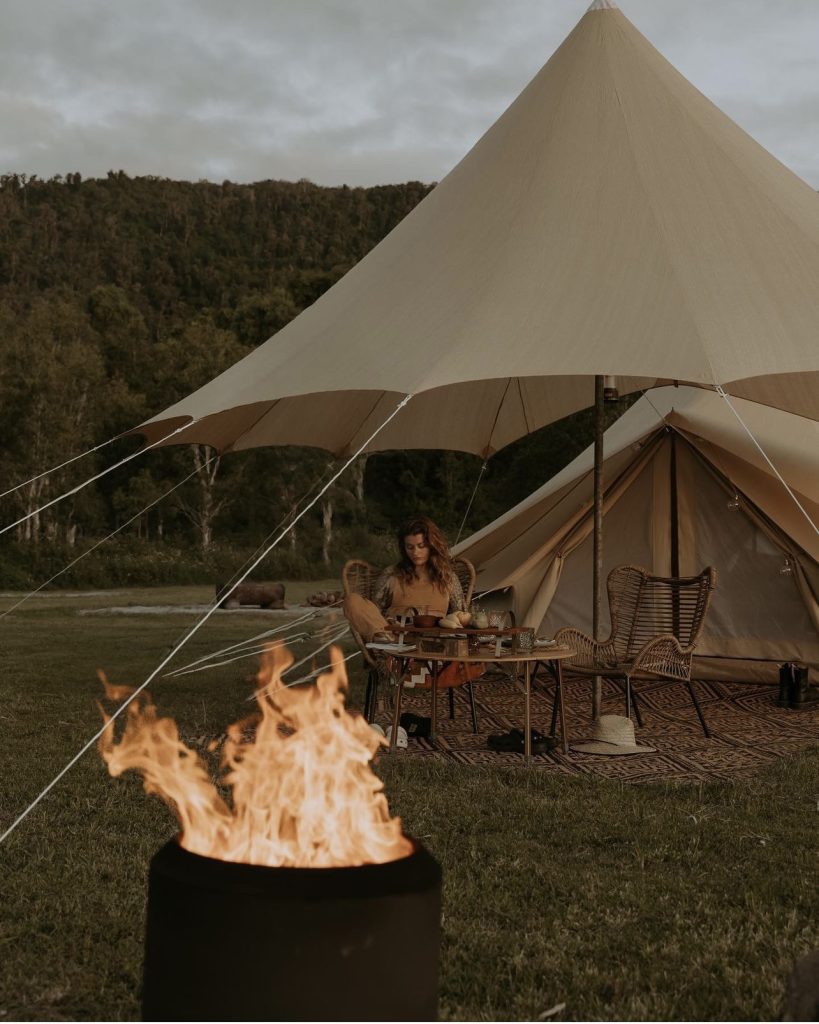
Keep lighting gentle
Dark skies are often one of a regional property’s most valuable attractions.
Excessive exterior lighting can affect:
- Wildlife
- Neighbouring properties
- The night-sky experience
- The natural character of the site
- Energy consumption
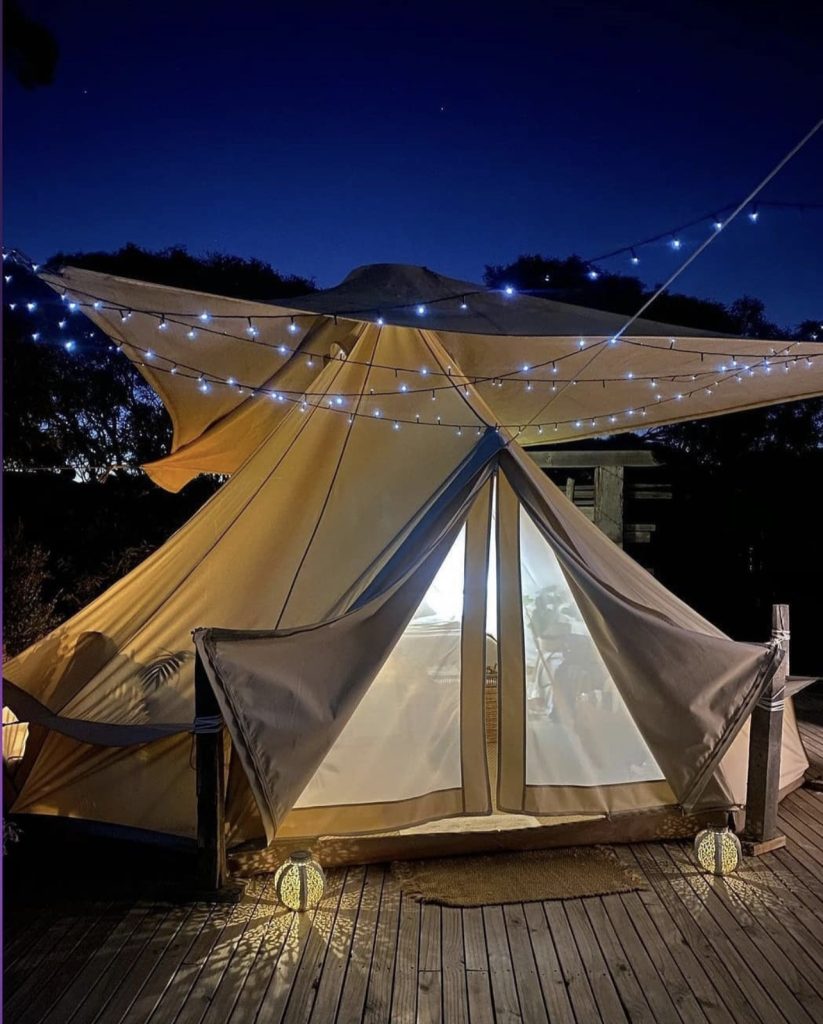
Lighting should be sufficient for guests to move safely, identify steps and see guy ropes without flooding the entire property.
Consider:
- Low-level path lighting
- Warm-coloured light
- Shielded, downward-facing fittings
- Motion sensors where appropriate
- Timers
- Solar lighting suited to the location
- Curtains or interior arrangements that reduce light spill
- Clearly defined pathways
Safety must remain the priority, but more light is not always better.
A carefully lit canvas tent can appear warm and inviting while allowing the surrounding landscape and night sky to remain visible.
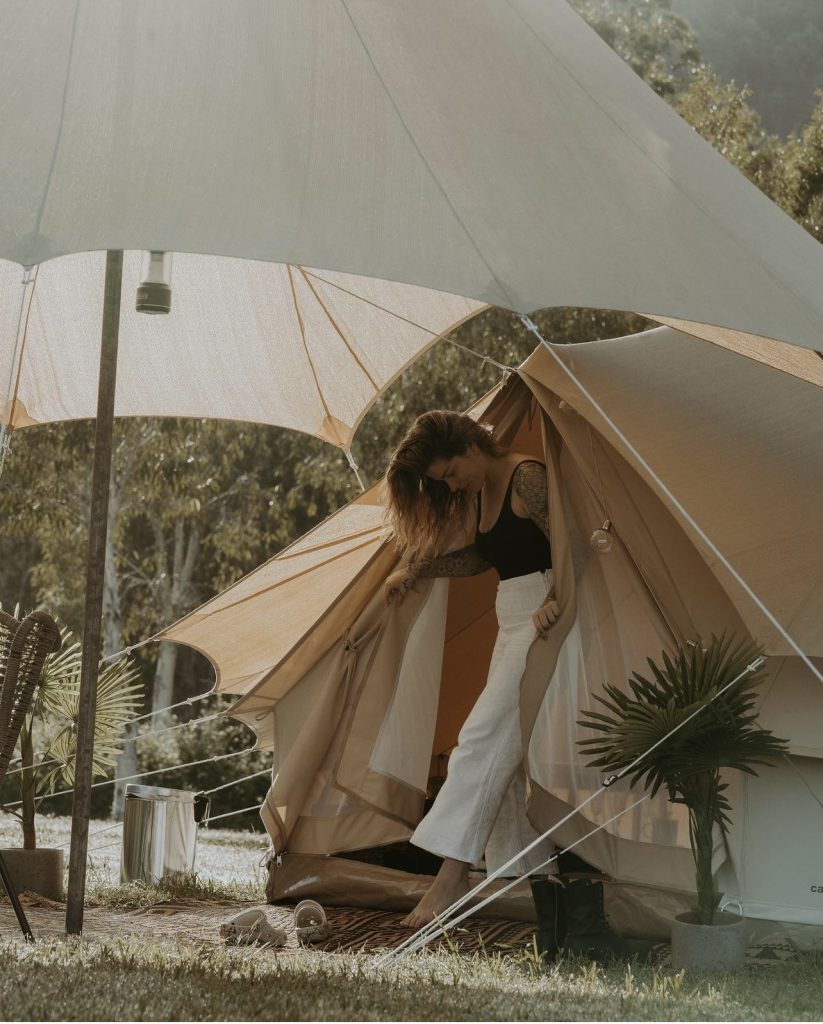
Choose durability over disposability
The environmental effect of a product includes how often it must be replaced.
A commercial glamping tent works much harder than a recreational tent. It may remain pitched for extended periods and experience frequent guest use, cleaning, UV exposure, wind, rain, dust and temperature changes.
Choosing a tent suited to its intended use can help reduce premature replacement.
Consider:
- Canvas specification
- Reinforcement at stress points
- Groundsheet durability
- Quality of zips and hardware
- Replaceable poles, pegs and guy ropes
- Availability of spare components
- Repairability
- Maintenance requirements
- Protection from extended UV exposure
- The manufacturer’s intended-use guidance
At Breathe Bell Tents, the Apex Professional Series is our most durable Sibley-style tent range and is generally our recommendation for glamping businesses, caravan parks and intensive or extended-use projects.
This does not make any tent permanent or maintenance-free. Commercial operators must inspect, clean and maintain their accommodation consistently.
The aim should be to preserve and repair the tent wherever practical rather than viewing it as a disposable shell.
Create a maintenance plan before opening
Preventative maintenance protects the tent, the guest experience and the surrounding environment.
A commercial plan should cover:
- Pre-arrival inspections
- Canvas cleaning
- Mould prevention
- Guy-rope and anchor checks
- Drainage inspections
- Tree and branch assessments
- Ventilation
- Groundsheet and flooring care
- Zip and mesh checks
- Repairs
- Reproofing when required
- Severe-weather inspections
- Seasonal pack-down procedures
- Replacement-part records
A neglected tent is likely to have a shorter useful life and may create unnecessary waste.
Maintenance also affects reviews. Guests notice clean canvas, secure doors, fresh air, well-kept flooring and an accommodation space that feels actively cared for.
Read: How to Keep Your Glamping Tents Guest-Ready—and Review-Ready
Design the interior with natural, practical materials
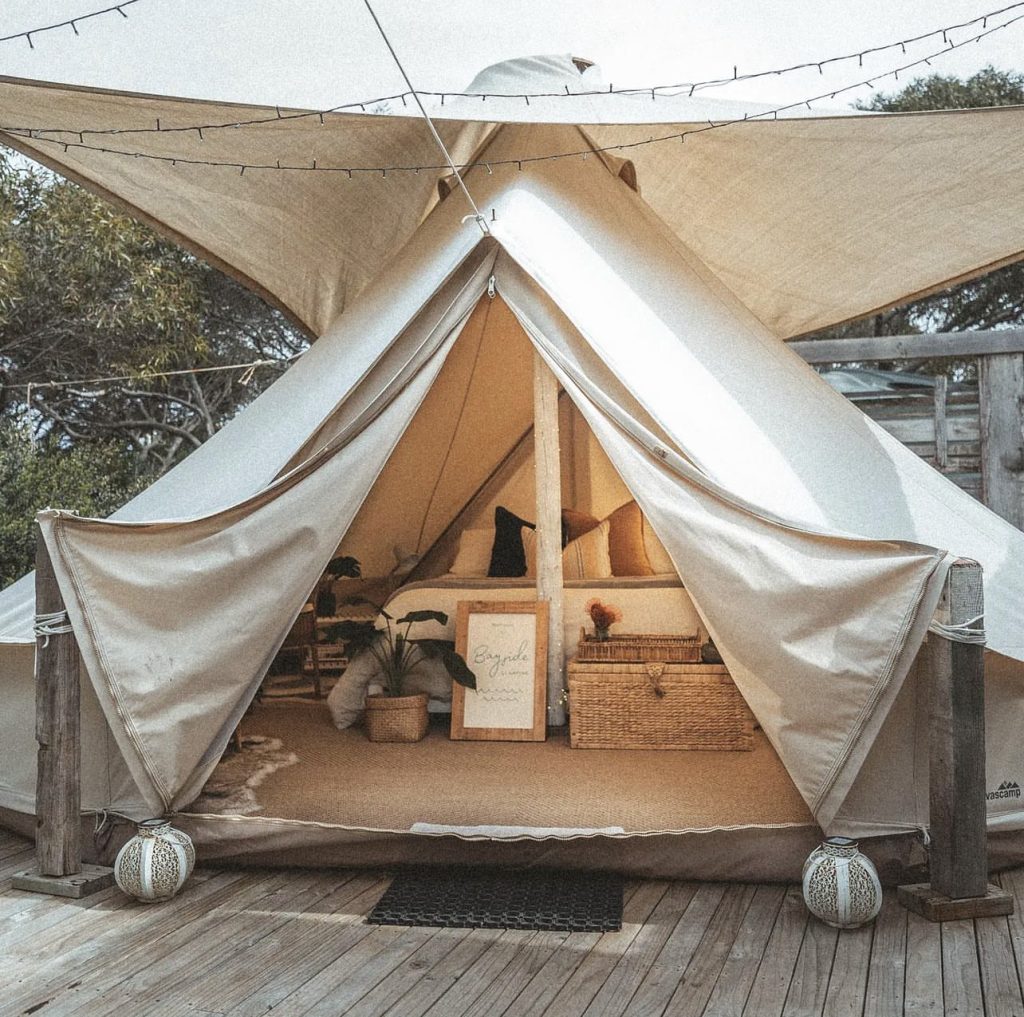
The interior should feel connected to its setting without becoming difficult to maintain.
Suitable choices may include:
- Durable timber furniture
- Natural coir matting
- Linen or cotton bedding
- Locally made furnishings
- Refillable bathroom products
- Reusable food and beverage containers
- Furniture that can be repaired
- Vintage or repurposed pieces where safe and practical
- Products selected for longevity rather than a short-lived trend
Natural materials are not automatically environmentally preferable. Consider their source, expected lifespan, transport, required treatments and whether they can be maintained.
Furniture should also be kept away from the canvas walls to maintain airflow and prevent rubbing or moisture from becoming trapped.
Connect guests to the place
Nature-based accommodation becomes more meaningful when it helps guests understand and appreciate the landscape.
This might include:
- Information about local plants and wildlife
- Walking maps
- Birdwatching guides
- Stargazing information
- Farm tours
- Seasonal produce
- Partnerships with local guides
- Cultural experiences developed with appropriate Traditional Owner involvement
- Information about water and energy conservation
- Guidance on staying within designated areas
- Simple explanations of why certain environmental measures are in place
Avoid presenting the landscape as an empty backdrop for accommodation.
Where a project is connected to Aboriginal culture, Country or heritage, engagement must be respectful, properly authorised and led by the relevant Traditional Owners or cultural representatives. Cultural stories should never be borrowed as styling or marketing decoration.
Manage guest behaviour without diminishing hospitality
Guests can unintentionally affect sensitive properties through noise, vehicles, rubbish, unattended fires, pets or movement outside designated areas.
Clear, friendly communication can help protect the site.
Guest information might cover:
- Approved pathways
- Wildlife and vegetation
- Waste separation
- Water use
- Fire restrictions
- Smoking
- Food storage
- Noise
- Exterior lighting
- Pets
- Gates and livestock
- What to do during severe weather
- Emergency contacts
Explain the reason behind important requests.
For example:
To protect the native vegetation surrounding your tent, please remain on the marked path when walking between the accommodation and bathroom after dark.
Guests are more likely to cooperate when environmental care feels like part of the experience rather than a list of unexplained restrictions.
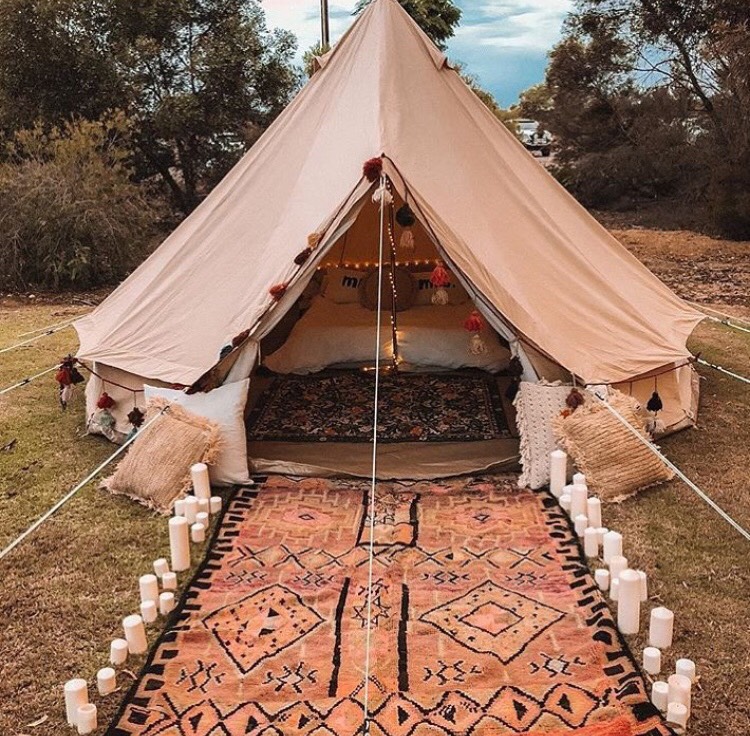
Source locally where it makes sense
A nature-based tourism project can support its region through considered local partnerships.
Potential collaborators include:
- Food and wine producers
- Farmers
- Artists and makers
- Guides
- Wellness practitioners
- Photographers
- Cleaning and linen services
- Trades
- Native-plant nurseries
- Conservation groups
- Visitor-information centres
Local sourcing can reduce some transport requirements and help create an experience specific to the destination. More importantly, it keeps a greater share of visitor spending within the region.
The strongest accommodation stories often come from genuine relationships rather than generic “eco-luxury” language.
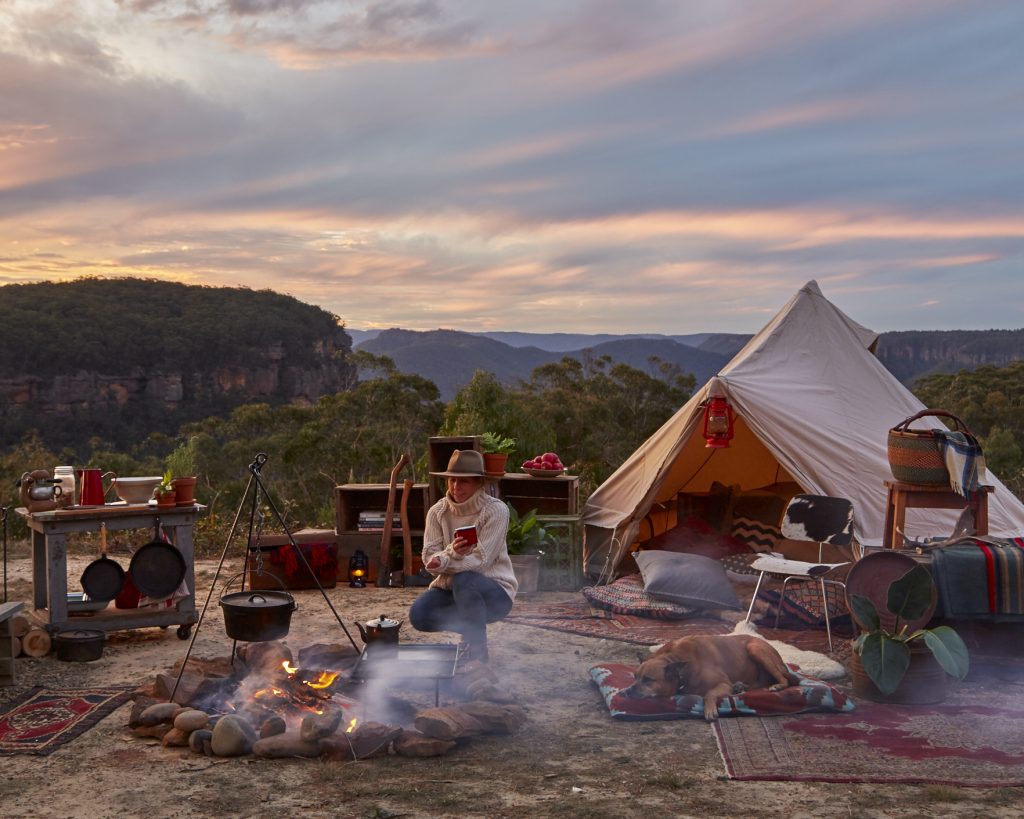
Be careful with sustainability claims
Words such as “eco”, “sustainable”, “low impact” and “off-grid” should be used carefully.
A canvas tent may have a smaller physical presence than a conventional building, but the complete project may still involve:
- Vegetation clearing
- Imported materials
- Energy consumption
- Water use
- Wastewater
- Vehicle movements
- Concrete, timber and steel
- Cleaning chemicals
- Waste
- Wildlife disturbance
Make claims that can be explained and supported.
Instead of saying:
Our glamping retreat has no environmental impact.
Use specific statements such as:
The accommodation was positioned on previously disturbed land, uses existing access tracks and incorporates shielded pathway lighting to reduce unnecessary light spill.
Specific actions are more credible than broad environmental promises.
Operators seeking formal sustainability or ecotourism certification should consult the relevant certification body and plan for those requirements from the beginning.
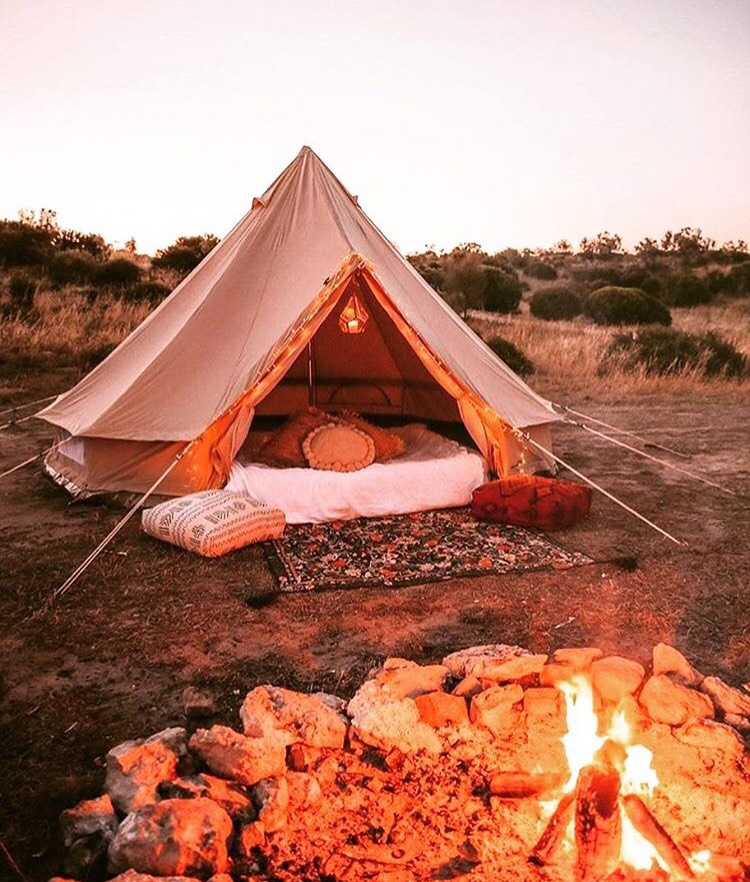
Plan for severe weather and seasonal closure
Sitting lightly within nature also means respecting the conditions of the site.
Bell tents are outdoor structures and should not be treated as conventional permanent buildings during severe conditions.
Every commercial operator should develop procedures for:
- Monitoring official weather warnings
- High winds
- Severe storms
- Flooding
- Bushfire danger
- Extreme heat
- Falling branches
- Guest evacuation
- Cancellation or relocation
- Post-weather inspections
- Seasonal closure
- Lowering or removing tents when required
The correct response will depend on the property, climate, product guidance, approvals and insurer’s requirements.
Closing temporarily during unsafe conditions is responsible nature-based tourism—not a failure of the accommodation concept.
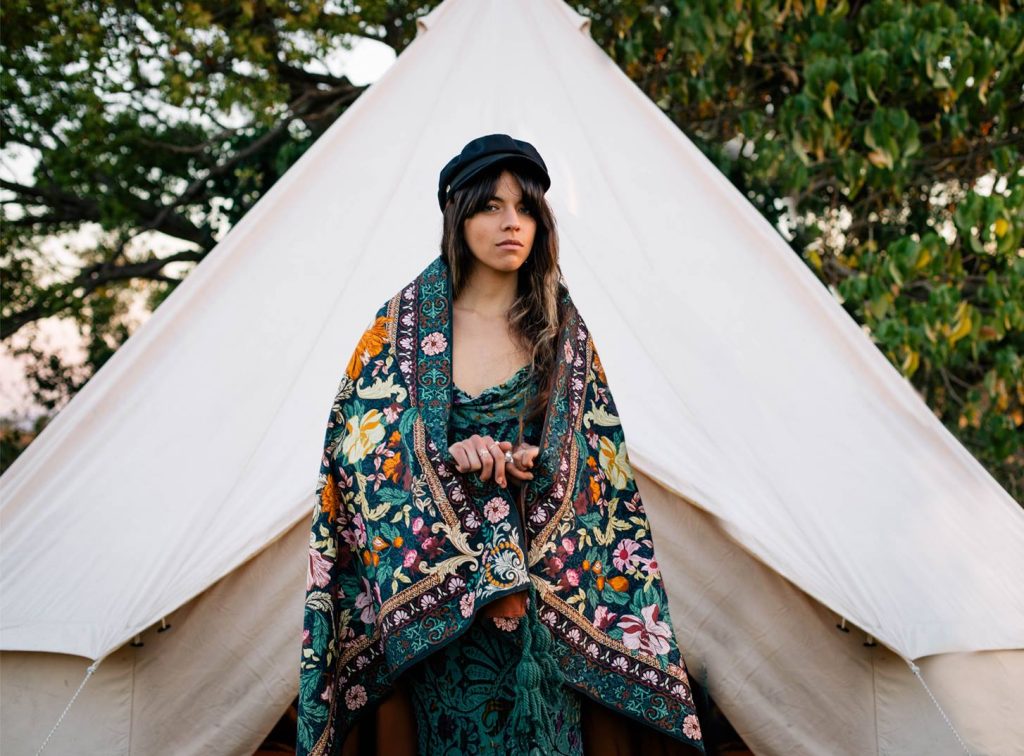
Consider the entire life of the project
A thoughtful accommodation plan considers what happens beyond opening day.
Ask:
- Can the tent be repaired?
- Are replacement parts available?
- Can the platform be maintained?
- What happens when the canvas eventually reaches the end of its useful life?
- Can infrastructure be removed?
- How will disturbed ground be rehabilitated?
- Can furnishings be reused?
- Will the project remain appropriate if guest demand changes?
- Can the operation reduce or expand without unnecessary demolition?
Canvas accommodation offers flexibility, but that potential is only realised when removal, repair and reuse are considered at the design stage.

Let nature remain the luxury
The most successful nature-based stays do not attempt to overpower their surroundings.
Their appeal may come from:
- Silence
- Privacy
- Birdsong
- A view from the bed
- An outdoor bath
- A fire on a cold evening
- A dark night sky
- A connection to a working farm
- Time away from screens
- Thoughtful, personal hospitality
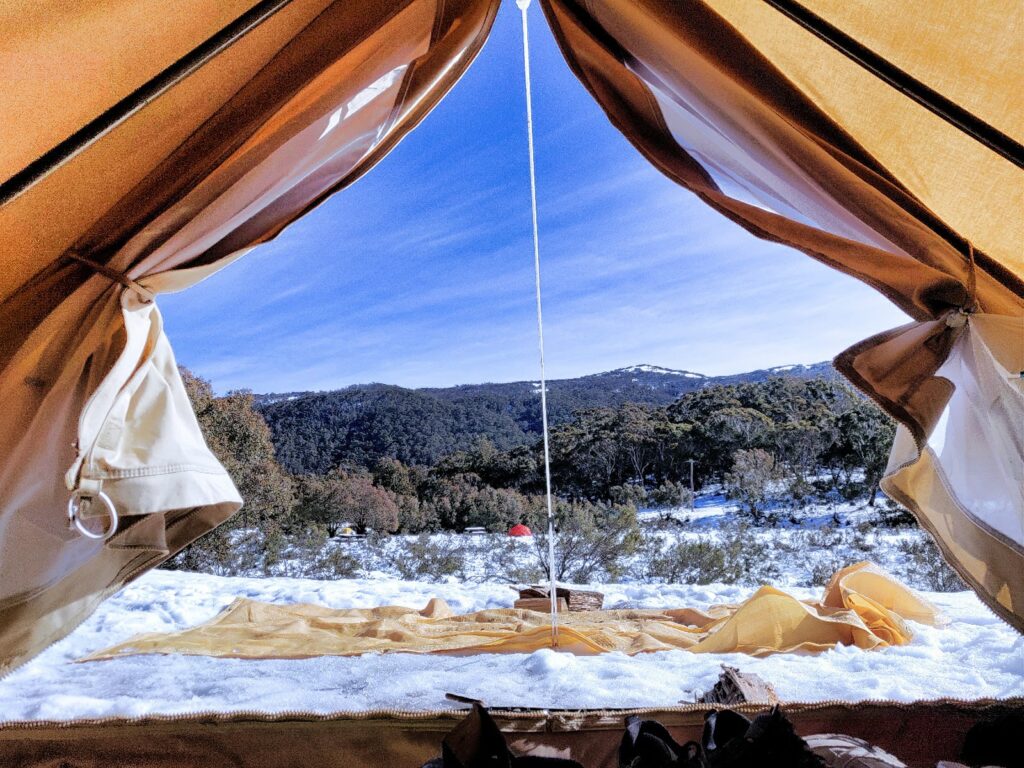
A canvas tent can create a comfortable threshold between shelter and landscape. It provides enough protection for guests to relax while allowing them to remain aware of the place around them.
That is where canvas accommodation can be particularly powerful.
It does not need to imitate a conventional hotel room. Its value lies in offering something a conventional room often cannot: a direct, atmospheric connection to nature.
A lighter approach requires serious planning
Canvas accommodation can form part of a lower-impact, flexible tourism project—but only when the complete development is carefully considered.
The tent is one component within a much broader system of land, access, water, energy, waste, safety, maintenance and hospitality.
Begin with the landscape. Disturb as little as practical. Choose durable, repairable products. Plan services responsibly. Grow at a scale the property can support, and make environmental care visible through specific actions rather than vague claims.
At Breathe Bell Tents, we supply canvas tents and accessories for farm stays, caravan parks, retreats and commercial glamping projects across Australia.
Our Apex Professional Series is designed for professional operators seeking our most durable Sibley-style canvas accommodation. We can also assist with CoolAir Protectors, inner tents, coir matting, compatible stove equipment, replacement components and itemised commercial quotations.
Planning a nature-based accommodation project? Contact Breathe Bell Tents with your proposed use, tent quantity, guest capacity and delivery location. We can help you identify the products most appropriate for your project while you work with your council, insurer and professional advisers on the wider development.
Low-Impact Tourism Depends on Trust—Not Just the Accommodation Structure
Choosing canvas accommodation may help reduce the visual and structural scale of a nature-based tourism project, but the tent alone does not make a development sustainable or low impact.
New University of Queensland research highlights how important trust, transparency and community involvement are when tourism is proposed in environmentally or culturally significant locations.
The study surveyed 1,000 Australians about tourism development in national parks and World Heritage areas. It found that 68% supported tourism in these locations when they trusted the organisation managing the project, believed the costs and benefits would be distributed fairly, and felt that communities were properly involved in decision-making.
Smaller accommodation formats were generally more favourably received than large lodges. Approximately half of respondents considered the consent of Aboriginal and Torres Strait Islander communities necessary, while 54% believed approval from local communities was required.
For glamping and nature-accommodation operators, the lesson is clear: sitting lightly within a landscape involves much more than selecting a removable structure.
A responsibly planned project should also consider:
- Appropriate siting and the visual impact of the accommodation
- Native vegetation, wildlife and sensitive habitat
- Water use, wastewater and drainage
- Vehicle access, parking and guest movement
- Energy supply, lighting and noise
- Fire, flood and severe-weather risks
- Local employment and economic benefits
- First Nations consultation where appropriate
- Community communication and transparency
- Long-term maintenance and eventual removal or replacement
Canvas accommodation can be a valuable part of a sensitively designed tourism project. It may provide a smaller and less visually dominant alternative to conventional buildings, particularly where operators begin with only one or two tents.
However, claims such as “eco-friendly” or “low impact” should reflect the complete project—not simply the material used for the guest accommodation.
The strongest nature-tourism proposals combine an appropriate structure with careful site planning, honest communication and respect for the people, culture and environment connected to the land.
Read the University of Queensland research summary