How to Keep Your Glamping Tents Guest-Ready—and Review-Ready

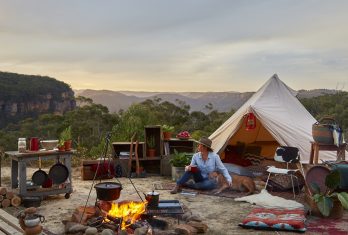
In commercial glamping, your tent is much more than a place for guests to sleep. It is part of the experience they photograph, share and review.
Guests may not know the difference between canvas weights or understand how a bell tent is constructed, but they will notice clean canvas, fresh air, comfortable bedding, secure doors, attractive flooring and thoughtful presentation. They will also notice musty smells, loose guy ropes, insects, stains or a tent that feels too hot, damp or neglected.
These details can directly influence the reviews your accommodation receives.
According to the Caravan Industry Association of Australia’s 2026 Caravan Park Guest Review Report, more than 202,000 reviews were posted about 1,000 Australian caravan holiday parks during 2025. Booking.com accounted for 54% of reviews and Google for another 33%, demonstrating just how visible each guest experience has become.
The good news is that more than 80% of reviews were positive. However, in an increasingly competitive outdoor-accommodation market, consistently maintaining your glamping tents can help protect both your physical investment and your online reputation.
Here is how to keep your tents guest-ready, review-ready and performing at their best.
1. Inspect every tent before every arrival
Even if the tent was cleaned after the previous guest, conduct a final inspection before the next check-in.
Weather can change quickly. Leaves may collect on the roof, insects can enter, guy ropes may loosen and rain can expose a drainage issue that was not previously apparent.
Your pre-arrival inspection should include:
- Walking around the entire exterior
- Checking the roof and walls for dirt, stains or damage
- Confirming that all guy ropes are correctly tensioned
- Checking pegs, anchors and attachment points
- Making sure doors and windows open and close properly
- Inspecting zips, toggles and mesh screens
- Checking the groundsheet and flooring
- Looking beneath beds and furniture
- Testing lighting, fans, heaters and power points
- Checking for insects, cobwebs or unwanted visitors
- Ensuring the tent smells clean and fresh
- Confirming that guest information is current and clearly displayed
It is much easier to correct a small problem before a guest arrives than to respond to it publicly after it appears in a review.
2. Keep the canvas clean—but avoid over-cleaning it
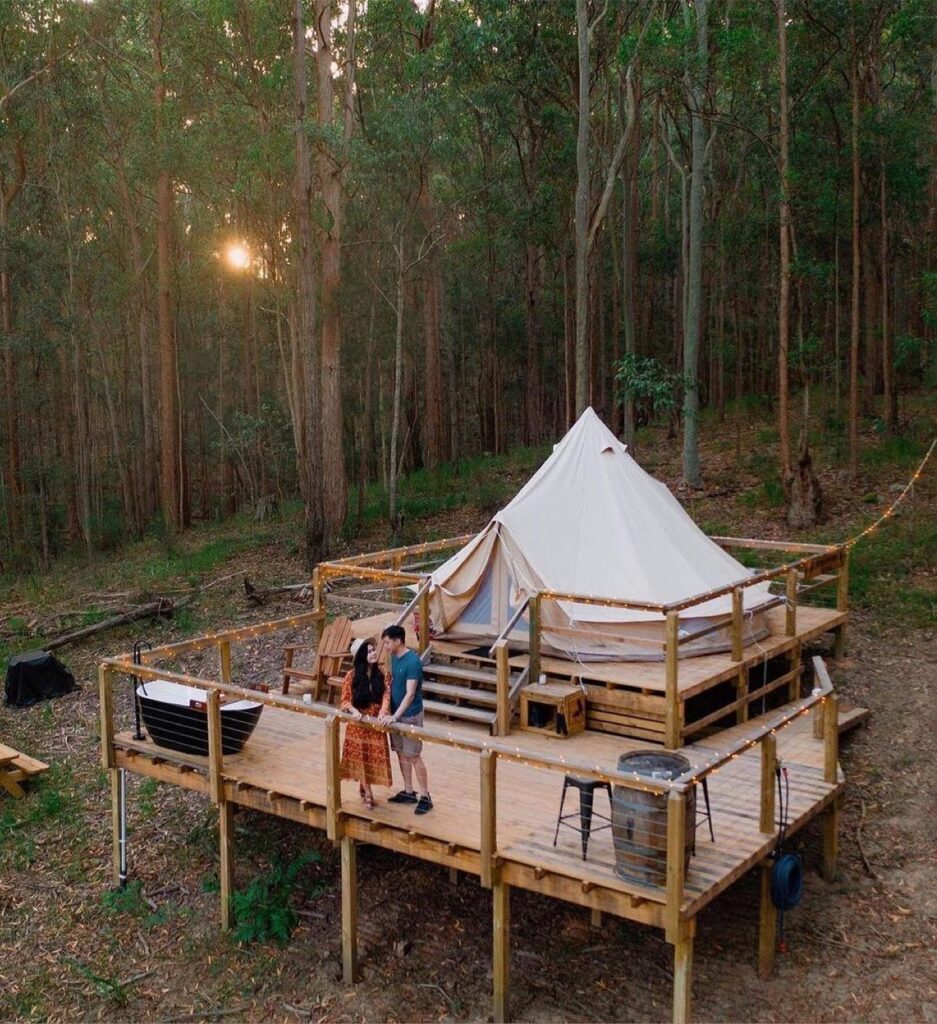
Canvas tents are designed for outdoor use and will naturally develop some marks over time. The goal is not to make an established tent look artificially new after every booking. It is to keep it clean, cared for and free from problems that may affect its appearance or performance.
Remove leaves, bird droppings, sap and other organic material promptly. Allowing debris to remain against the canvas can hold moisture and create conditions in which mould may develop.
When cleaning canvas:
- Begin with a soft brush or clean cloth.
- Use clean water for light dirt where possible.
- Follow the manufacturer’s care instructions.
- Avoid harsh detergents, bleach and aggressive scrubbing.
- Do not pressure-wash the canvas.
- Test any cleaning product on a discreet area first.
- Allow the tent to dry completely.
Over-cleaning or using unsuitable chemicals can damage the canvas treatment and shorten the useful life of the tent.
Include the roof in your inspection routine. Guests may not study the roof closely while inside, but it is often prominent in photographs and can be the first part of the accommodation they see on arrival.
3. Prevent mould before it begins
Mould is one of the most common—and most avoidable—problems affecting canvas tents.
It generally develops when moisture, organic material and insufficient ventilation occur together. This makes prevention far easier than treatment.
To reduce the risk:
- Keep the canvas clean and free from leaves and debris.
- Ventilate the tent between bookings.
- Do not leave wet towels or damp linen inside.
- Check for condensation behind beds and furniture.
- Avoid pressing furniture directly against the canvas walls.
- Make sure the site drains effectively.
- Address water pooling around or beneath the tent.
- Inspect less-visible areas regularly.
- Never pack a tent away while damp.
If your tents are installed for an extended season, check them even when they are unoccupied. Closing a tent after a guest departs and leaving it untouched for several wet weeks can allow a minor moisture issue to become a serious problem.
Mould is not only a maintenance concern. A visible patch or musty smell can quickly affect guest confidence and reviews.

4. Prioritise ventilation and temperature
One of the great advantages of quality canvas is its breathability, but ventilation still needs to be actively managed.
Before guests arrive:
- Open doors, windows and vents to refresh the interior.
- Check that mesh screens are clean and unobstructed.
- Confirm that beds, curtains or furniture are not blocking airflow.
- Test fans, air conditioning or heating where installed.
- Consider the sun’s position at the hottest part of the day.
In summer, shade and airflow can make a significant difference to guest comfort. A CoolAir Protector may provide added shade and help protect tents that remain pitched for extended periods.
Where air conditioning is installed, remember that a canvas tent is not a sealed building. The system must be suitable for the tent size, local climate and installation. It should also be professionally installed and managed safely.
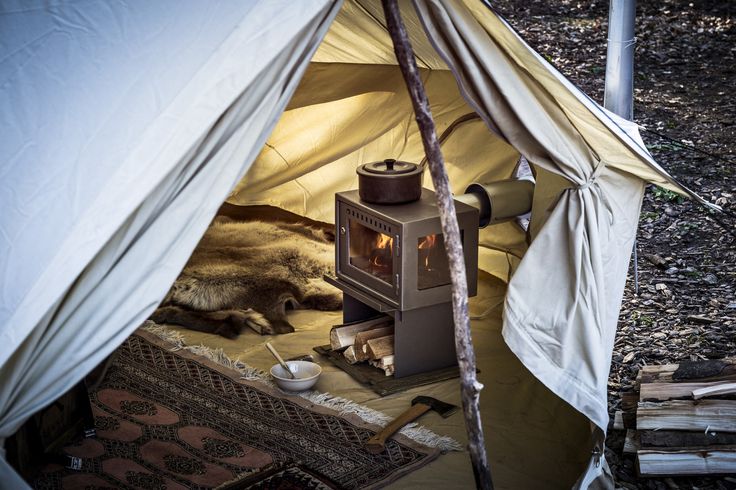
During colder months, provide appropriate bedding and safe heating options. If using a wood-burning stove, all components—including the stove, heatproof floor protection, flue exit and clearances—must be correctly installed and operated according to the applicable instructions and site requirements.
Guests will forgive an unusually hot or cold day more readily when they can see that the operator has anticipated it and provided practical solutions.
5. Check the floor from a guest’s perspective
Guests interact with the floor constantly, yet it is easy for operators to overlook.
Before every booking, check for:
- Sand, dirt, leaves and hair
- Dampness or condensation
- Stains and odours
- Raised edges or trip hazards
- Damage beneath furniture
- Insects
- Movement between rugs and the groundsheet
- Dirt entering around the doorway
Coir matting can add warmth and texture to a glamping tent while also helping define the interior. However, rugs should be lifted and cleaned regularly so moisture or debris is not trapped underneath.
An additional groundsheet beneath the tent can also help protect the sewn-in floor and keep it cleaner, particularly where the tent is erected directly on the ground.
Provide a practical place for wet or muddy shoes near the entrance. A small bench, covered outdoor mat or shoe basket can protect the interior while making the arrival experience feel more considered.
6. Maintain guy ropes, pegs and anchors
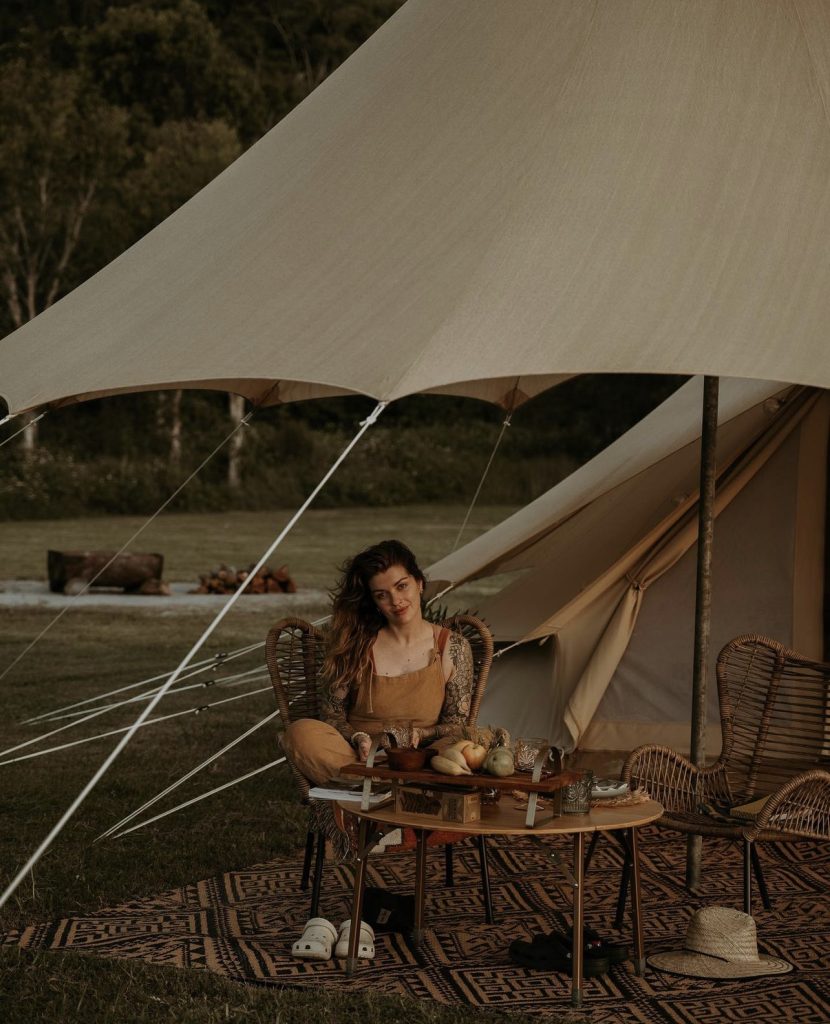
Loose ropes and poorly positioned pegs affect more than appearance. They can compromise tent performance and create trip hazards for guests.
Check regularly that:
- Every guy rope is present and correctly attached.
- Ropes are evenly tensioned.
- Pegs or anchors remain secure.
- No rope is excessively worn or frayed.
- Guest pathways remain clearly defined.
- Exterior lighting makes ropes visible at night.
- Children cannot easily enter unsafe areas around the tent.
Never remove guy ropes simply to reduce the footprint or make mowing easier. The tent relies on its complete anchoring system.
If space is limited, short guy poles may help reduce the distance required around compatible bell tents, but they must be installed correctly and should not be treated as a substitute for proper anchoring.
After strong wind or heavy rain, inspect the entire structure before allowing another guest to occupy it.
7. Protect the tent from prolonged exposure
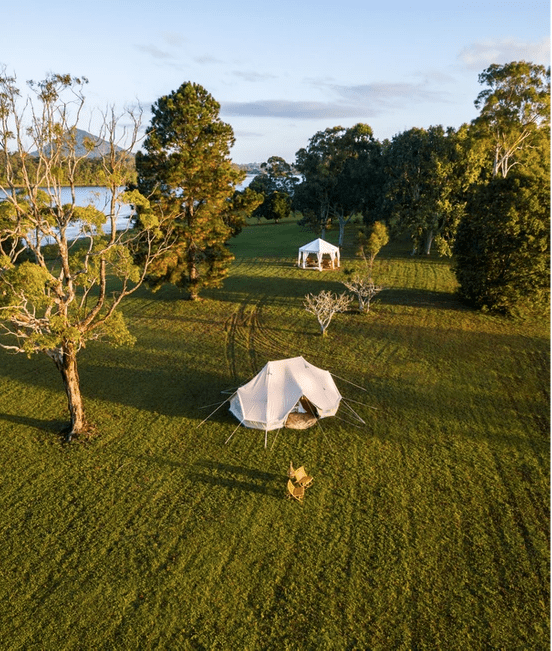
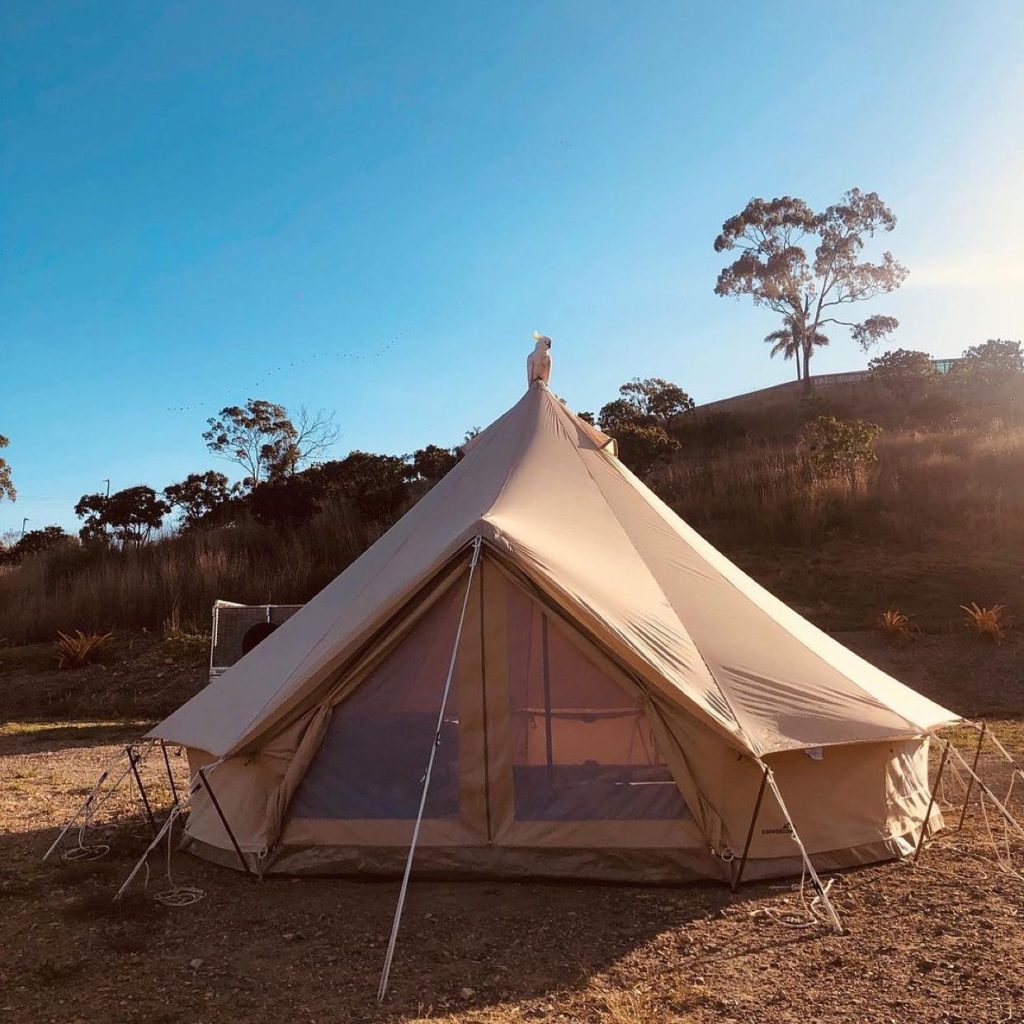
A commercial glamping tent may remain pitched far longer than a recreational tent, which increases exposure to UV, rain, tree sap, dust, wind and falling debris.
Site selection makes an enormous difference.
Consider:
- Daily sun exposure
- Drainage
- Prevailing winds
- Overhanging branches
- Falling sap or bird activity
- Local bushfire conditions
- Access for maintenance
- Adequate separation between tents
- Seasonal weather patterns
Avoid positioning tents directly beneath branches that could fall or continually deposit organic material. Inspect nearby trees as part of your property-maintenance and risk-management program.
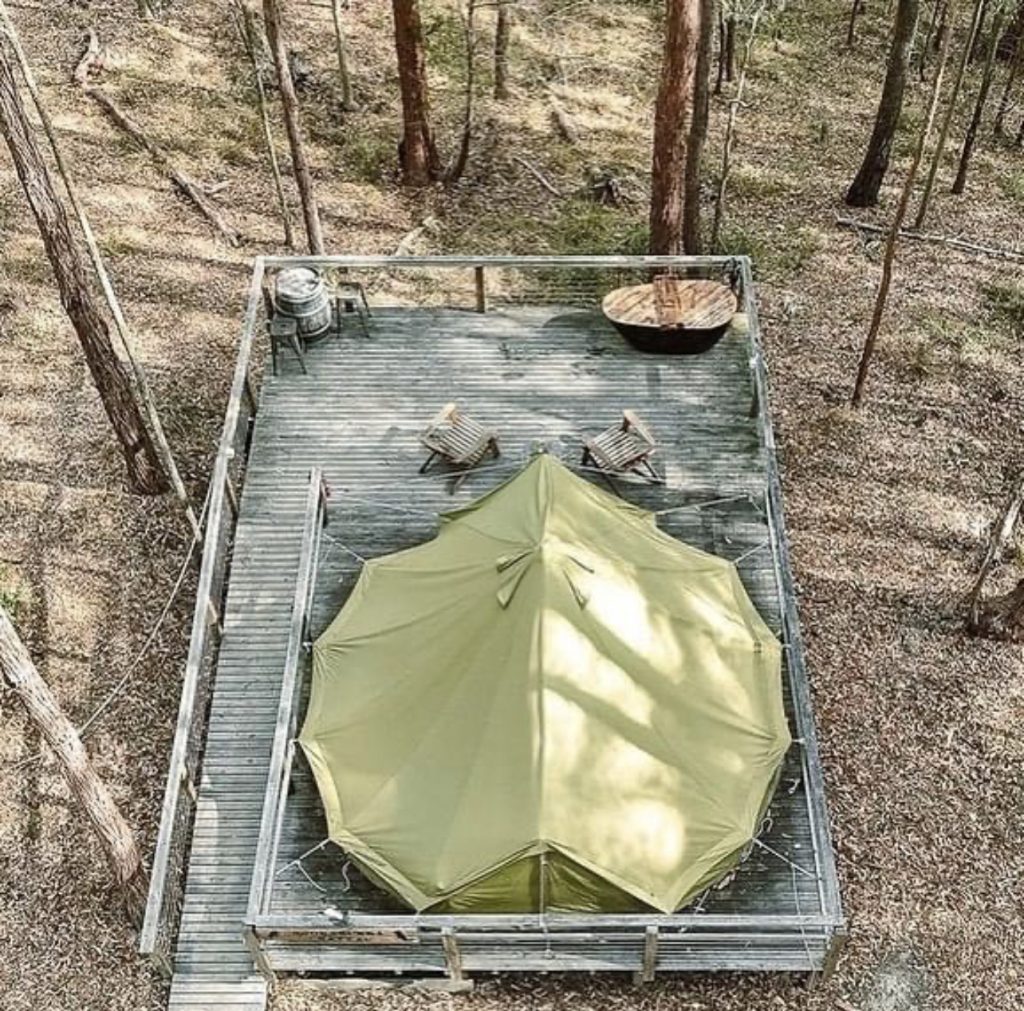
For longer-term installations, a suitable protector can reduce exposure and make routine maintenance easier. At Breathe Bell Tents, the CoolAir Protector is generally the more appropriate option for glamping tents and other extended-use applications because its shade-sail-style mesh is designed with long-term UV exposure in mind.
A protector adds another layer of care, but it does not remove the need to inspect and maintain the tent beneath it.
8. Make beds and furniture easy to maintain
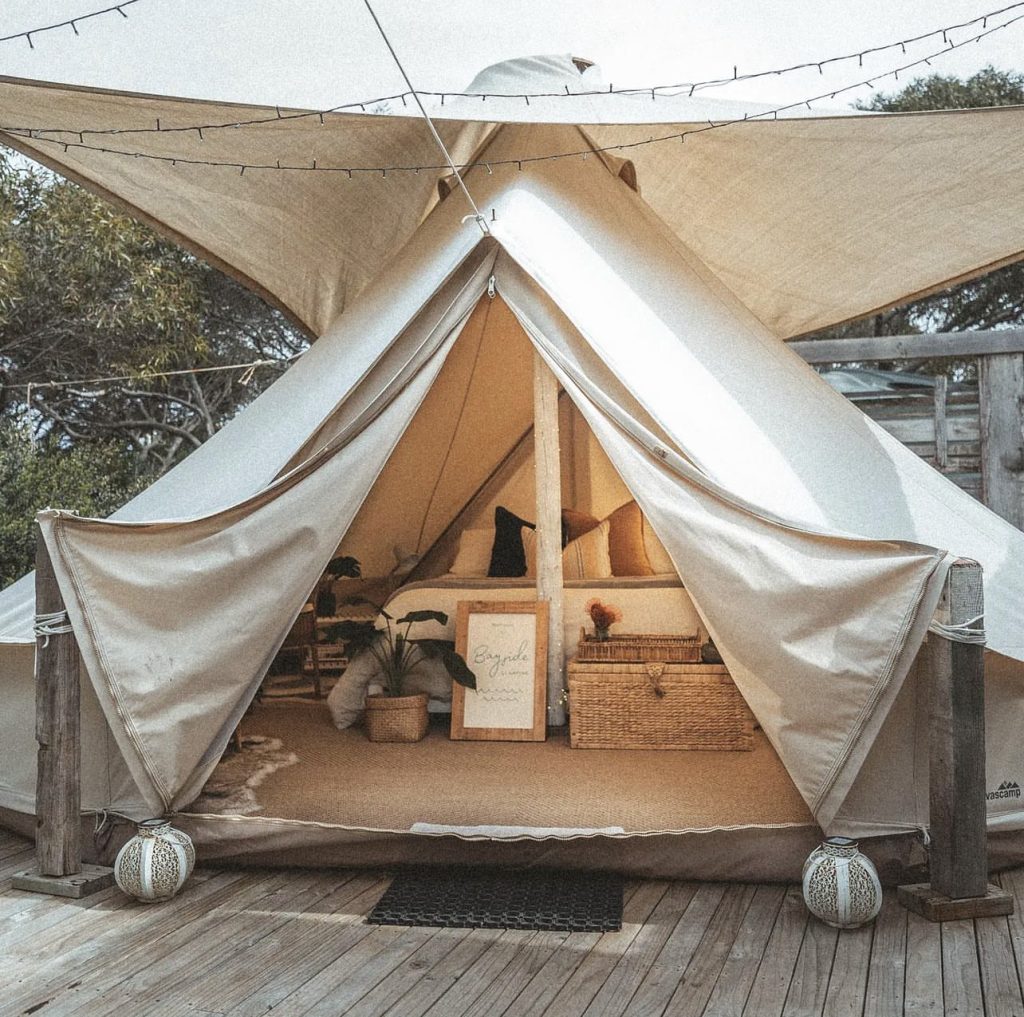
A beautiful glamping interior should also be practical for cleaners and maintenance staff.
Choose furniture that:
- Can be moved for cleaning
- Does not press against the canvas
- Allows airflow beneath and behind it
- Does not have sharp edges that could damage the tent
- Can tolerate the temperature changes of an outdoor structure
- Provides sensible storage for guests
Beds should be positioned so staff can inspect behind and underneath them. Bedheads and decorative items should not rub against the canvas wall.
Keep a complete inventory for every tent and replace damaged or tired items promptly. A missing wine glass may seem minor, but the accumulation of small inconsistencies gradually reduces the quality of the experience.
9. Pay attention to smell
Smell is one of the first things a guest notices on entering accommodation.
A tent may look immaculate but still feel unclean if it smells damp, musty, smoky or heavily fragranced.
Before arrival:
- Air the tent naturally.
- Remove damp towels and cleaning cloths.
- Check beneath beds, rugs and furniture.
- Inspect bins and food-storage areas.
- Wash soft furnishings regularly.
- Investigate persistent odours rather than covering them with fragrance.
Strong air fresheners can create their own problems, particularly for guests with allergies or sensitivities. Clean, dry canvas and fresh air should provide the foundation.
10. Prepare guests to look after the tent
Guests cannot follow rules they have never been given.
Provide short, friendly instructions covering:
- Shoes and muddy equipment
- Wet towels and swimwear
- Food storage
- Smoking and candles
- Cooking inside the tent
- Use of heaters or stoves
- Closing doors and mesh screens
- What to do during strong wind or severe weather
- How to contact the operator
- Reporting spills or accidental damage
Keep these instructions practical and welcoming. The goal is not to make guests anxious but to help them enjoy the accommodation safely.
For example:
To help us keep your canvas retreat fresh and beautiful, please leave wet towels in the bathroom or on the outdoor drying rack rather than against the tent walls.
A thoughtful explanation is generally more effective than a long list of prohibitions.
11. Have a severe-weather plan
Every commercial outdoor-accommodation business should have a documented approach to severe weather.
This may include:
- Monitoring official forecasts and warnings
- Defined wind or fire-danger thresholds
- Guest communication procedures
- Evacuation routes and assembly points
- Alternative accommodation arrangements
- Closure and cancellation procedures
- Staff responsibilities
- Inspection requirements after an event
- Procedures for lowering or removing tents when necessary
A bell tent is not a permanent building and should not be treated as one during severe conditions.
Your emergency plan should reflect the site, local hazards, manufacturer’s instructions, council requirements and insurer’s expectations. Staff should understand the plan before they are responsible for guests.
12. Record inspections and maintenance
Keeping records may not feel like part of hospitality, but it protects both the business and the accommodation.
Maintain a simple record for each tent showing:
- Inspection dates
- Cleaning undertaken
- Weather events
- Repairs
- Reproofing or treatment
- Replacement ropes, pegs or components
- Electrical or heating checks
- Reported guest issues
- Photographs where appropriate
- Staff member responsible
These records make it easier to identify recurring problems and budget for replacements. They may also help demonstrate to councils, insurers or business partners that the accommodation is being actively managed.
13. Respond to reviews—especially when something went wrong
The 2026 Caravan Park Guest Review Report found that the industry responded to only around half of eligible reviews.
Responding demonstrates that the operator listens and takes responsibility for the guest experience.
When responding to a negative review:
- Thank the guest for raising the issue.
- Acknowledge their experience without becoming defensive.
- Explain what has been investigated.
- State what has been corrected where appropriate.
- Avoid sharing private details.
- Invite direct contact if further discussion is necessary.
A thoughtful response can reassure future customers almost as much as a positive review.
Reviews can also reveal patterns. If several guests mention heat, privacy, insects or dampness, treat that feedback as operational data rather than isolated criticism.
14. Use positive reviews in your marketing
With permission where necessary, good reviews can become valuable content for:
- Your website
- Google Business Profile
- Social media
- EDMs
- Booking pages
- Printed guest information
- Seasonal campaigns
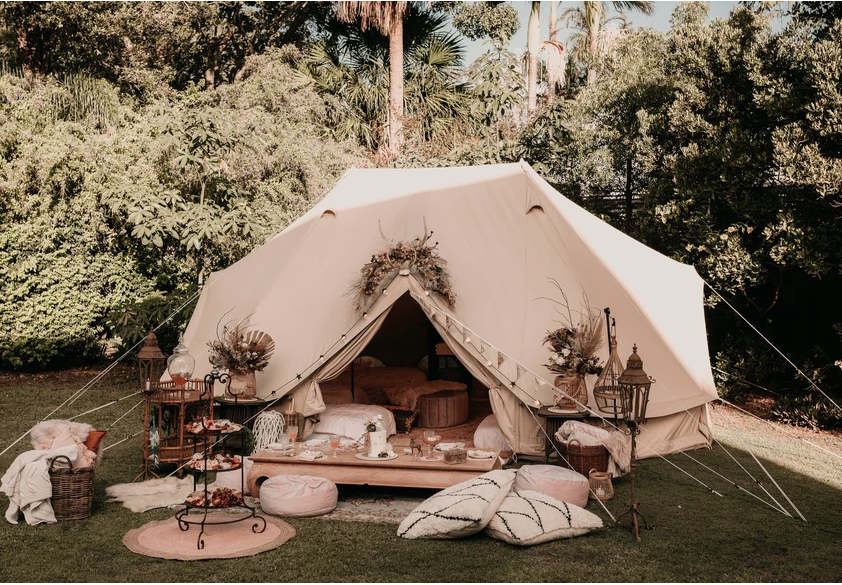
Pair the review with an image of the exact tent or experience being described. Specific comments—such as waking to birdsong, sleeping comfortably in winter or enjoying an outdoor bath under the stars—are more persuasive than generic claims of luxury.
The most compelling glamping marketing shows how the guest felt, not simply what furniture was provided.
Create a maintenance rhythm
Rather than waiting for something to go wrong, establish a clear maintenance schedule.
Before every arrival
- Air and inspect the tent
- Check cleanliness and smell
- Test doors, zips, lighting and equipment
- Inspect ropes, anchors and flooring
- Confirm bedding and inventory
Weekly during operation
- Inspect the roof and exterior canvas
- Remove organic debris
- Check under furniture and rugs
- Review drainage
- Inspect ropes, pegs and high-wear points
- Check for early signs of mould or damage
After severe weather
- Close the tent until it has been inspected
- Check anchors, poles and attachment points
- Look for water entry or pooling
- Inspect nearby trees and branches
- Document and repair damage before reopening
At the end of the season
- Clean and dry the tent thoroughly
- Complete repairs
- Review which components need replacement
- Store the tent completely dry if it is being packed away
- Update maintenance records and plans for the next season
Your tent is part of your reputation
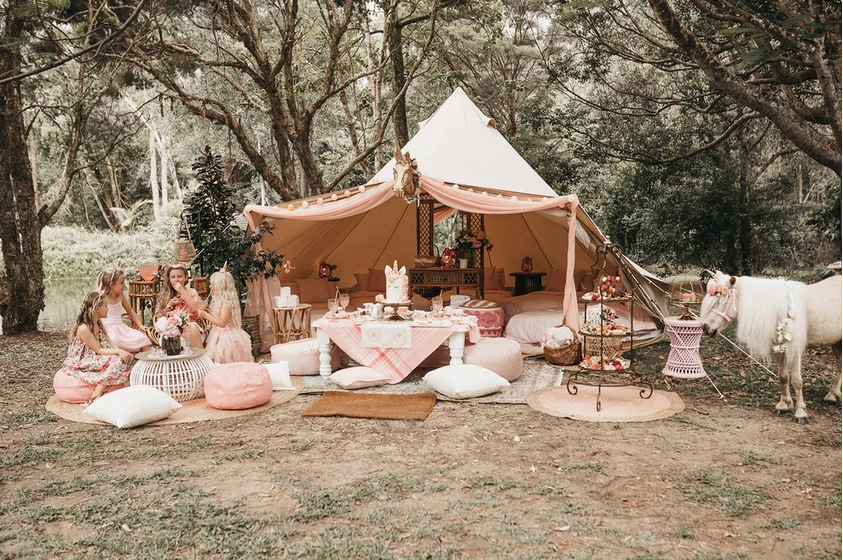
A glamping tent does not need to resemble a hotel room to earn excellent reviews. Guests often choose canvas accommodation precisely because it offers something more atmospheric, natural and memorable than a conventional room.
What they do expect is evidence of care.
Clean canvas, thoughtful ventilation, secure anchoring, comfortable bedding, well-maintained flooring and clear guest information all communicate the same message: this experience matters to its operator.
Choosing a quality, repairable tent is the beginning. Consistent care is what protects the tent, the guest experience and the reputation of the business over time.
At Breathe Bell Tents, we supply a range of bell tents for recreational and commercial use, including the Apex Professional Series, our most durable Sibley-style tent for glamping businesses, caravan parks and extended-use applications.
We can also assist with protectors, replacement components, inner tents, flooring and practical product information for your proposed setup.
Planning a commercial glamping project? Contact Breathe Bell Tents to discuss the tent models and accessories most appropriate for the way you intend to operate.

Further reading
- Do You Need Council Approval for a Glamping Tent? What Australian Operators Should Check Before Investing
- Can You Air Condition a Bell Tent? The Complete Guide to Staying Cool in Summer
- The Complete Bell Tent Buying Guide
- Caravan Industry Association of Australia: 2026 Caravan Park Guest Review Findings